Dan Heller's Photography Business Blog Industry analysis from www.danheller.com

The photography world -- the business, the culture, the art, the politics, the technology.

Site Feed

Subscribe to
Posts [Atom]

View mobile version

My Photo
Name:
Location: Santa Cruz, California, United States
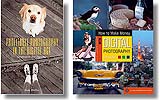
My Books on the
Photography Business

Sunday, July 01, 2012

Royalty Free no longer exists


I have always gotten a continuous stream of questions about Royalty Free vs. Rights-Managed images, and I usually just send people to numerous posts I've written in the past.

But a recent email to me concerning Photoshelter's use of the terminology compelled me to post a short blog entry on the subject to try to make it even simpler to understand.

Royalties are payments made to authors (photographers in this case) in exchange for the right to sell works (images). The moment any photographer is ever paid anything by an agency, s/he has received a royalty. Even if it's a one-time payment.

Rights Managed ("RM") means that someone has the right to say how a photo may be published. There's always someone that has the right to manage a work's usage terms. Yes, "unlimited, unrestricted use" is still "managed" if that's what the rights manager wants. Even public domain and creative commons are terms stipulated by someone -- usually the author.

By definition, ALL images are Rights Managed, even if the manager chooses not to assert those rights, or is very liberal about how others may use the photo.

Royalty Free ("RF") refers to a special kind of license agreement that can only take place between two stock photo agencies. Here, the primary stock agency grants another agency the right to resell images, and that second agency is under no obligation to pay royalties back to the photographer.

Why would such a thing happen?

Before the internet (and up till mid-1990s), distribution of images to buyers was difficult. Smaller stock agencies that couldn't sell some supply of images started selling them to OTHER stock agencies with better distribution channels (usually, the early internet adopters). Because these images were usually lower quality, the concern was that these images might not sell. In order for the deal to make financial sense for all parties, the photographer was paid a one-time royalty for the transaction, the primary agency got a single, lump-sum payment from the secondary agency, and that second agency was now on the hook to make some money. Sometimes they did, but often they didn't. But they could only agree to take this risk so long as they were not obligated to pay royalties back to the photographer. These were royalty-free images. 

At the time, photographers were finally making money from images that would have otherwise sat unsold, and the smaller agencies were often seen as tributaries to the main stock agencies, who themselves were taking advantage of a very quickly expanding base of buyers because of the growth of the internet.

As the idea showed profitability, more agencies started selling and reselling the same images in the same way to many stock agencies, creating a huge market for RF images. Each time, the photographers would get royalties from each such sale. And, in each case, the "royalty free license" meant that each (secondary) agency down the distribution channel was not obligated to report sales or pay royalties to the photographer.

The tipping point came when the ease and cost of access to the internet allowed those smaller agencies to sell directly to the buyer. And, for the buyer to find those images through better search engines. The need to feed the primary agency networked collapsed, which coincided with the time when Getty's stock price was plummeting from the mid-$80s to the low $30's, when they were finally taken private. Note: Getty's price didn't plummet because of the rise of RF images. The entire economy of images was falling precipitously because no agency could control (choke) the supply channel any longer. All agencies were hurting and RF was no safer than traditionally-licensed images.

I am currently unaware of any actual Royalty Free Licenses being used in photography. I believe it no longer exists. (The practice is still used for clip art, icons and some other kinds of media (smaller music labels) where channel distribution is still difficult.)

So, why are the terms, "RF" and "RM" still used? 

Remember how those secondary agencies were on the hook to monetize these images or lose money? They did so by enticing buyers with very liberal license terms, such as "unrestricted (use), unlimited (time)."  Thus, photographers (and later, newbie agencies that didn't understand history) misunderstood RF as implying these unrestricted usage terms. For a long time, RF really did mean "unrestricted."

But I rarely see such license terms anymore. Even the license terms used by today's agencies for their so-called RF images are often not as liberal as the original RF terms once were.

Today, the terms "RF" and "RM" are interpreted mostly by PHOTOGRAPHERS to mean that they will make more money with RM images than RF, even though those economics are not as predictable. My personal opinion is that the terms remain simply to attract (and direct) photographers towards certain business terms with the agency. Most buyers have no idea what they mean... nor do they care. They only care about the terms of use, which has nothing to do with RF or RM.


Labels: , , , , , , , , , , , , ,

Friday, March 02, 2012

Market Efficiencies and Stock Photo Pricing

In my last blog post, Selling Stock: It's About Search Rank, Not Price, I argued that the price variability in the stock photo industry can be exploited by those who garner high search rankings. The rationale is that the direct and indirect cost (overhead) of finding an image so far exceeds typical license fees, that photo buyers are more indifferent to those license fees than sellers believe. Thus well-ranked photo sites would be able to command higher license fees, simply because they have first access to the buyer.

In fact, well-ranked photo websites are undermining their own profitability by lowering prices unnecessarily, mostly because they are following their perceived competitors, not because the customer is demanding lower prices. Their rationale would follow traditional economic theory under most market conditions, but therein lies the exception. The photo industry does not represent "normal economic conditions." Indeed, the photo industry represents a classic case of an "inefficient market."

Let me explain by starting with the definition of an "efficient market." It can be summarized as a market of buyers and sellers engaging under conditions where all information is available to parties on both sides of a transaction. (See this wikipedia link for extended definitions, examples, and citations.)

Examples of efficient markets are exchange-traded commodities like oil, orange juice and automobiles, among others. Here, producers of commodities make their wares generally available, and market-makers trade on this information. It is exceedingly difficult (if not impossible) to have inventory that the market is unaware of, or to purchase commodities without the broader market's awareness. These are the conditions that lead to the definition of an "efficient market."

While there will always be price volatility, it is almost entirely governed by predictions of how supply and demand might be affected by external events. The weather affects the price of Orange Juice; war and instability affects the price of oil; and a litany of factors affect the auto industry.

When it comes to image-licensing, most buyers and sellers do not have that much information about the "global" market of buyers or sellers, let alone access to conditions that can affect future supply and demand. This results in "market inefficiency," which results in price inconsistencies, precisely as predicted by economists. Therefore, prices vary from high to low across the spectrum, depending on the perception of the buyers in any given time/place. This is because they have limited and incomplete information about the global supply chain.

This also explains why people objected to my proposition from my prior article. They do not have access to "all information," and worse, they are unaware that their worldview is limited. That is, most pro photographers are under the illusion that the entire market of stock photos is monopolized by a small number of stock agencies.

Ironically, the other markets (non-agency buyers/sellers) don't see the other side either. These discrete and separate markets will, by definition, find different prices than buyers in other markets. Stock agencies will view one another as competitors and lower their prices, whereas websites that are unaware of stock agencies (or don't attempt to compete with them) will command higher prices.

To optimize prices and create an efficient market, the following would have to take place:

  • Stock agencies would have to expand to cover a larger proportion of the image-buying market. As my prior article advised, the way to do this is to partner (or merge) with photo-centric websites, whose proportion of global internet traffic is very high. This will allow "more information to be more universally available to a greater proportion of the buyers and sellers." This now leads to market efficiency.
  • Once the market became efficient, it could then be automated through predictive pricing algorithms, precisely the way Google automated online ad prices using an auction-based mechanism. No doubt this is not a simple algorithm, and it took years to evolve, requiring considerable data mining to determine optimal market pricing. But it was achieved to a point where it is now a highly viable (and mutually beneficial) economic model for buyers and sellers. The market of photo buying is similarly large, and there's enough economic activity that appropriate data-mining efforts could lead to similar algorithms for auction-based image license pricing.

The question is whether anyone is willing to invest enough into this untapped market.

Labels: , , , , , , , , , , , , ,

Friday, February 17, 2012

Selling Stock: it's about search rank, not price

Yesterday, I reposted an article I originally wrote in 2007, discussing the misconception that microstock pricing is what's driving down overall license fees.

I got a few emails that still challenged my assertion, and it appears I haven't emphasized strongly enough the most compelling arguments supporting this thesis.

All of my research supports the premise that the primary cost of licensing images is not the license fee, but the overhead associated with finding and acquiring the right image. The overhead and administration of a project that would involve photo licensing shows that the actual license fee ranks very low on the budget -- hence, low on the buyer's priority list. My 2007 surveys of buyers showed that.

If the person responsible for finding images for a project is paid $60/hr, and this person spends 2-3 more hours looking for a photo just to pay $1 vs. $50, this translates to paying someone $120-180, just to save $50. People who control budgets know that the license fee for photos is negligible to the total cost of production, even at the traditional stock photo rates. The bigger the project, and lower the proportion of the license fee for the image(s).

Those who sell images are dropping their prices because they're looking at their competition, not the buyer. Further, there is absolutely no evidence to show that sites that have lower prices sell more images. There is definitely a perception that there's a correlation, but that's because people are comparing apples to oranges. Getty sales vs iStock sales are not apples-to-apples because the two entities vary dramatically in search engine results (and other important factors). People talk about microstock sites more, and they link to them (in blogs, discussion forums) and the quantity of images on microstock sites is rapidly growing. So naturally, these sites get higher rankings in search results. Search engines don't rank sites because they have lower prices. They rank sites by size (content), links, and a black magic formula that is best described as "dispersion of discussion in and around the net." In short, microstock sites have more content and get more attention. Hence, better rankings, which translates to more traffic, which attracts more photographers to submit images to them, perpetuating the feedback loop.

In my 2007 survey, those who indicated they were aware of--and use microstock sites-- most don't go to them because the prices are lower; it's mostly because those sites ranked higher in search engine results, where the buyer starts.

Because search engine ranking drives traffic -- especially the untapped (and unaware) segment of the global economy that doesn't use stock agencies -- and because the greatest cost in photo acquisition is time, not the license fee, 90% of the time-savings is the image results the user gets on that initial search. If it takes the buyer to a stock agency site -- microstock or otherwise -- then the deal is nearly done. Price notwithstanding.

This is primarily why I have advocated for years that stock sites should focus their entire effort towards optimizing search engine rankings. While they could have done something about it in the past, the rise of social networks and the plethora of image-related websites and apps has made it impossible for agencies to rank highly on image-search rankings on their own. In today's market, they have no choice but to either partner with, or acquire/be-acquired-by a social-networking site.

The Getty<->Flickr combination is a very pragmatic example. Yahoo is circling the drain, and it needs to shed its non-performing assets and focus its attention on ... something. Whatever that is, it isn't Flickr, and there aren't a lot of buyers that would be interested in that asset, except for Getty or Corbis. The combined product would involve retooling Flickr to be far more socially active (to keep up with modern social networking trends), and to integrate licensing/acquisition into the user/social experience. Most importantly, to provide incentive programs for photo submitters to participate economically. (I've written a great deal about this in the past.)

Of course, perhaps Yahoo should just buy Getty. Facebook is getting into the game, which tends to lead one's eyes towards Google, but they are still struggling to play catch up in the social-networking arena, and their photo division is not run by someone with a disposition towards stock or an awareness of the economics of the photo industry. The company is more interested in building assets that support their advertising model. There's no evidence that "licensing" is on their radar--a pity because they would be on the forefront of the Web 3.0 economic model, where images would play a huge role. (See here.)

In the meantime, there's a $25B shadow economy in peer-to-peer photo licensing that's up for grabs. (See here.)

So, you ask, "how do you convince agencies of this?"
I've been trying since 1998.

(For fun, see this web archive of my site from 1999 discussing this topic.)

Labels: , , , , , , , , , , , , , ,

Sunday, November 13, 2011

Creative Commons Effect on Photo Licensing

Julie Bernstein asked me the following question: "I am curious if your views on Creative Commons have changed since the four articles you published on this topic in '08."

Julie is referring to these articles (part1, p2, p3, p4) where I describe the CC as a great licensing method for almost all media types except photography.

In summary, what the CC has done is create a legally legitimate infrastructure for those who freely share copyrighted works. Before CC, such activity was technically an infringement, because the the publication of creative works requires consent of copyright holders. CC clears up that technicality, which is great. But it has inadvertently given people the impression that it has affected the licensing industry's pricing structures.

CC has not affected the greater licensing market (or prices), largely because of risk: CC has no centralized authority to assure that content is either submitted properly or used properly. Because it's so easy to game the system on either side of the photo (the supplier or the user can sue the other by luring them with a legally misleading scenario), the financial liability for anyone with a lot to lose is simply too high, especially given that traditional license fees are so minimal. So, the majority of image buyers simply stay away from CC.

Now, this is not to suggest there's something wrong with the CC model in principle. I'm a big advocate for it in all other contexts. Indeed, it was born out of the "free software" meme that was popular in the 1980s and 90s, when Gnu Public License (GPL) and other models were the precursors to the "open-source" model we still enjoy today. These are great innovations in licensing because they allow intellectual property to be used for the greater good, while also allowing for commercial use of those innovations.

But CC in the world of engineering is entirely different from photography. Engineering takes a considerable amount of time, resources and (usually) teamwork to produce anything of value that those in the open-source community would use. As such, the kind of content there is proportionally minimal, and each work is substantial and recognizable, making infringements quite easy to spot.

None of this is true in photography -- trillions of images are produced daily, it's impossible to track any given photo, or whether it is "legitimate" (either by the owner or the user).

So, sure, in a world of honest people that want to freely share their content in a peaceful corner of the image licensing market, CC is great. The CC market is growing, but the perception is only as a measurement of itself, not the total licensing market. An article on that topic can be found here:
http://www.danheller.com/blog/posts/total-size-of-licensing-market.html

Lastly, it's natural to ask, "If CC is so easy to game, why haven't we seen it?" The answer is because the market is so negligible. Economists often use crime data as a reality check on the economic activity they think they're aware of. The higher the crime rate, the more economic activity there is, and there's usually parity between that activity and the presumed size of a commodity's market. If there's little crime, the market size isn't big enough to warrant the effort. If CC were to genuinely gain momentum, it would attract those who would game the system for profit, which itself would have a cooling effect, bringing its popularity back down.

For the record, I've proposed that the best way to assuage people's risk concerns about CC is to use the "copyright registration" system. The CC foundation should have a submission system where those who want to submit images for CC licensing would bulk register those images to the copyright office. This gives them the right to file claims on behalf of the copyright owner, which is how major stock agencies like Getty work. Registered images are eligible for higher level of copyright protection, and there are federal penalties for fraudulent use. This means that users of CC images can be protected from invalid claims by those trying to game the system because this is built into the copyright act's provisions. Similarly, authors can be assured of CC compliance because non-compliant users could be subject to an infringement claim. Yes, you can sue someone for copyright infringement, even if the license fee were zero, because the infringement is another form of "breach of contract." Here, the user of a CC image agreed to the terms of CC by (for example) citing copyright ownership. Failing to do so is an infringement of that contract, and is therefore subject to the statutes provided by copyright law.

This would not only allow CC to have actual teeth, but the trust would go up as the risk comes down.

But such an infrastructure would be quite expensive to operate. That'd be a tall order just to create a system that brings the license fee for a commodity down only a few dollars, even if it is only to zero.

Labels: , , , , , , , , , , , ,

Wednesday, September 28, 2011

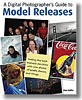
Busting Myths about Model Releases

The internet is a virtual echo-chamber of facts and myths of all sorts. When something goes viral, there's no stopping it. Even the most blatant falsehoods can perpetuate for years if they cause no harm in believing them. An example is the myth that the different regions of the tongue tastes different types of things: sweet in the front, sour in the back, etc.. In fact, all taste buds are identical, but the myth started from a single, faulty study in the 1800s that was published in a school text book, and it's been repeated ever since.

In the photo business, the greatest myths are those involving model releases. If you have ever considered selling (or licensing) photos on your own, or through a stock agency, you've probably been told that photographers need "model releases" to sell photos of people, and "property releases" to sell photos of buildings and the like. Some stock agencies actually reject images unless these photos have releases.

While it's true that model release are necessary for certain situations, the actual laws about these issues are deep and complex. As rumors and hearsay perpetuate on the net, the over-simplification has resulted in virtually all the "advice" and conventional wisdom about model releases to be entirely wrong. And the reason why these myths perpetuate is because they cause no harm. No one ever got sued for having a model release. So, people follow the advice because they (and others) seem to be safe, perpetuating the myths.

So, why address the myths about model releases? Because photographers are losing enormous opportunity by not trying to sell the images they don't have releases for, and by going to great lengths to get releases they don't need. Despite the rumors, most publications of photos are not the type that need releases anyway, resulting in an enormous market of buyers. Most photographers could continue to have very successful businesses without ever getting model releases, all while doing exactly what they are doing today. Sure, releases are important for many types of publishers, so if you do get releases for their benefit, you can expand your buyer base by getting them. But it's a proportionally smaller market than people think, and the time, effort and resources necessary to properly obtain, manage and catalog releases is rather substantial. This investment will rarely be offset by the incremental income from sales of images that actually do require releases.

This article attempts to help the photographer looking to make money by setting the record straight on the most common myths about model releases.

Fact #1: You do not need a model release to take pictures.

Nuff said. Don't let anyone tell you otherwise. Everyone in the world has a camera on their phones, and photos are taken constantly. You don't need someone's permission to take their pictures. Now, just because you might eventually intend to sell your photos has nothing to do with the ability to take pictures in the first place.

Fact #2 You do not need a model release to sell pictures. And "profit" has no effect on whether a release is required.

First, newspapers buy photos, and their use of the photo is unlikely to need a release. So, selling a photo (and making a profit doing so) to a newspaper also does not require a release. And because the law does not require you to have any knowledge of the buyer or their intended use of a photo, you are always allowed to sell photos without a release.

Fact #3 You do not need a model release to make photos available for sale, either on your own website, or through a stock agency.

If one can sell a photo without a release, one must also be able to "make photos available for sale" without a release. This includes the publication of such photos in a manner that would allow potential buyers to find them.

The legal case that established precedent for this was Corbis vs. James Brown, where the judge called the depiction of a photo as being for sale a "vehicle of information". Here, consent from a subject is not required.

Therefore, one can make photos available for sale in any manner of publication and media, whether it's traditional print or online formats, including personal web pages, photo-sharing sites, social media sites, stock photo sites, or mostly anywhere.

For detailed information, see the article, Model Release Primer.

Fact #4: A "property release" is NOT required to sell or buy photos of buildings or people's personal property (like land).

The root of this misunderstanding is complicated. The term "property" in an actual "property release" refers to two particular forms of intellectual property: trademarks and copyrights. Examples include logos, designs and other works.

Now, just because these are "protected" works, it doesn't mean that one cannot publish photos of them. It only means that the manner in which such works are depicted cannot cause confusion among the general public about who "owns" the properties, or other legally complex factors. It is impossible for a photo of a bottle of coke to cause the general public to suddenly think that the Coca Cola company was now owned by a freelance photographer in Topeka. If the photographer sold the image to a publisher, and the publisher's use of the image would imply that it had a unique and special business relationship with Coke, then that would trigger a trademark infringement claim. But that would be with the publisher, not the photographer, nor the stock agency that sold the image. Furthermore, such an infringement couldn't possibly happen by merely the photo being printed. Text around the photo would have to give this impression. And, since the photographer or anyone selling such a photo cannot know or control how a publisher uses a photo, they could never be held liable for the infringement.

Like the myth about the tongue's different taste regions, the history of the "property release" stems from a single misimpression from long ago. Certain physical structures, such as the Golden Gate Bridge and the Transamerica building in San Francisco happen to be registered trademarks. And, they have been infringed upon inappropriately in the past, but these were cases that have nothing whatsoever to do with photography. And at the time, news of these suits briefly caused publishers to shy away from publishing photos of such places unless photographers could provide property releases for them. Those releases were not for the buildings, but for the right to use the trademarks. This was very short-lived, however, because it is impossible for photographers to obtain "true" (and legally valid) property releases for trademarks without paying enormous sums of money. So, even though the publishers stopped asking for those releases, the rumor perpetuated nonetheless: photographers erroneously interpreted these requests as "mandates" that all photos of buildings required "property releases." And they've been behaving that way ever since.

To be crystal clear, property releases are not required to sell or resell photos of buildings and other real estate (or physical property of any sort, such as land, pets, livestock, homes, etc). If something happens to be a registered trademark (building or otherwise), then the publisher will already be quite aware that they are the ones that need to obtain permission from the trademark owner (which may not even be the building owner). Any permission obtained by the photographer would be entirely useless to the publisher. In fact, every single property release used by photographers gives no legal right to use a trademark, and since buildings and other items do not require consent for photos of them to be used, these property releases are worthless pieces of paper. But they also cause no harm.

For more, see Photographers' issues concerning trademarks and photography.

Fact #5 You usually do not need permission to shoot pictures of (or on) private property.

While it's true that property owners can restrict photography, that's not saying much. They can also stop you from picking your nose. It's their property, so they can stop anyone from doing anything. You've seen signs that say, "No shoes, no shirt, no service." There's also the sign that reads, "We reserve the right to refuse service to anyone." In short, property owners can apply restrictions indiscriminately and inconsistently and arbitrarily.

But, the owner has to proactively take an action to prevent you from doing things. It's not that you're prohibited from actions by default, and they then grant you permission later. So, most of the time, there are rarely (if any) actual restrictions property owners enforce.

This includes taking pictures. It's permitted by default, and to prevent it they must take explicit actions, including (but not necessarily limited to) posting signs, as noted above. If you are not stopped (or are given reasonable advanced notice), any photos you take are legitimate, and can be sold legitimately. (See later section on "ownership.") Further, one may not retroactively enforce their restriction. That is, if you were at a private event, and then later told you were not allowed to take pictures, it has no affect on your photos or your ability to sell those images. (Publishers, on the other hand, may need releases if the nature of the publication would require it. But that doesn't affect the photographer's liability.)

So, if you're in a bar, or in an amusement park, or touring a winery, you are allowed to take pictures unless you're told not to while you're there. And if you do take pictures, you can sell them to any buyer willing to assume the risk, if any exists.

Sometimes, photographers will often seek permission to shoot pictures ahead of time. This is not only unnecessary, but invites someone from stopping them. If you know ahead of time that you will need permission, that's another story.

Fact #6: You do not need releases for Art, Books, Exhibitions, Presentations, Fairs, Contests, Postcards, Calendars, Etc.

At the risk of over-simplification, the only time a release is needed is if a person can be seen as supporting or advocating an idea, product or service. True, there are often disputes about whether a given publication of a photo of someone could be construed in such a way, but the dispute gets closer into the safety zone when that publication is a form of artistic expression. The First Amendment of the US Constitution protects "artistic exhibitions" (and publications) as a form of free speech, so consent from anyone else—by definition—is never required. Money or profit has nothing to do with whether a work is published or "depicted in an artistic manner."

Again, people argue frequently about whether such depictions are, in fact, artistic in nature, which leads to a complex argument: is it art, and if not, is it a promotion, and if so, is it the type of promotion that should have required consent from the person in the photo?

While these are all good questions, the reality is that no one has ever successfully won the argument that a model release was necessary for a photo that was used in a book, in an art gallery, or at a fair, or any of the items in the above list. In short, the law is on the side of the First Amendment by default - a claimant bears the burden of proving otherwise, and that's a difficult and very expensive bar to clear. While is indeed a very deep and complex subject, those wishing to seek quick answers can feel relaxed: "don't worry. You're fine."

For for more info, I encourage you to read this.

Fact #7: Photographers do not need releases for photos in their portfolio.

A portfolio is a collection of artistic works that demonstrate the skills and talents of the photographer. Permission is not required in order to use photos of people in a portfolio. This includes all forms of publication of the portfolio, whether in physical form, or as a website, or other media.

The one thing to be aware of, however, is that sometimes photographers take pictures of people in special, "closed sessions," where an agreement was made ahead of time—before the photo was taken. If a subject posed for a photographer with the pre-arranged agreement that the photos would not be used in a portfolio or any other manner, than that agreement takes precedent. (Of course, a new agreement, such as a model release, can supersede it.)

For more on this, see Personal Privacy and Model Releases

Fact #8: Posting photos online is just another form of publishing.

What determines the need for a release is whether a photo makes someone appear to support, advocate or promote ideas, products or services. The medium itself is irrelevant, whether it's traditional physical media, or online/electronic media. One cannot say whether a release is required for photos "posted on the web" because it depends on the way the photo depicts the person in it.

When photographers put images on their professional website, they think that this suggests that the people in those photos could be construed as sponsors or advocates, but that's not complete. Putting photos online to "sell" does not require a release, depictions of "art" do not require a release, and a "portfolio" does not require a release. The only way a photo would require a release is if the photographer created a self-promotional piece (such as an ad) that promoted his or her services, and used a photo of someone that might suggest it is a client.

Fact #9 Ownership of physical pictures and ownership of rights are different.

When people hire photographers to take pictures of them, they think they own the photos, or have rights to publish them. They don't. This has to be agreed upon, usually ahead of time (but it can be negotiated later.) Normally, this isn't a problem. But where things break down is when subjects don't like the photos of themselves. Here, they try to demand them back, but they don't have this right. (They also cannot retract permission if it's been granted in writing, such as a model release.)

The same thing is true of pictures taken on (or of) people's property. They think that because it's their house, or their private event, or their pet, that they have the rights to the photos. They don't. Nor can they stop the photographer from publishing those photos. Non-humans do not have inherent rights, unless protected by trademark or copyright.

Concusion

The reality is that photographers (and stock agencies) don't get sued for the publication of an unreleased image. And given the very high cost of suing someone, litigants are usually told by their lawyers to go after the "publishers" of the images in question, as they are the ones who bear the true legal liability.

As an active photographer, understand that most people are entirely uninformed about model releases, and factor this into your business dealings. Publishers, stock agencies and many others may vehemently demand a model (or property) release before buying photos, or for accepting your images into a stock agency. Despite their being wrong, this is the way of the world, and you can only do what they ask, or don't play.

But don't underestimate the sales potential of your unreleased images, and the large market of buyers who don't make such demands.

For those with interest in reading the details, I have many articles that answer all the technical questions, like this one and this one. I also wrote a book called, Photographer's Guide to Model Releases.

Labels: , , , , , , , , , , , , ,

Monday, February 14, 2011

Search Engine Optimization and The Long Tail

I was inspired by an entertaining article I read in today's New York Times titled, The Dirty Little Secrets of Search, detailing the rise and fall of JC Penney's Google rankings. Turns out, JC Penney's SEO consulting firm allegedly bought a huge number of paid links on websites, most of which aren't actual sites at all, but domain names purchased solely for the purpose of placing links to PC Penney. Google takes this very seriously, and has been known to eliminate sites completely.

The rationale for this approach is, as most people know by now, that your ranking is governed most largely by the number of other sites that link to yours. Unfortunately, what many people still don't know is that gaming the system doesn't work. (Link exchanges are a sure way to lower the ranking of both sites that link to each other. That's why JC Penney's SEO firm just created sites that had one-way links.) While it'd be nice to have organic linking, where people simply "talk about you" (and provide a link) on many websites on the net, that's not so easy to do and takes a lot of time.

In this day and age, if you're going to succeed as a stock photographer, you have no choice but to figure this out. This strategy begins with two questions: 1) which keywords or phrases do you want to rank highly for, and 2) how do you seed yourself around the net?

The answer to the second question begins with the first: find the right keywords.

Here is where most photographers (and agencies) get it wrong: they shoot for keywords like, "stock photography," and other industry trade terms. But this doesn't work so well. Google's Traffic Estimator shows terms like "stock photography" yields only about 90,000 global monthly searches. Sites that rank highly for only a few keywords or phrases never do well, even for popular search terms. Instead, reach for many search terms -- as many as possible.

My site (danheller.com) ranks in the top five positions on 751 search terms, and 1205 search terms rank in the top 10 on Google Search results, according to Google's Webmaster Tools. But I'm not actually trying to rank highly for any given search term at all. That would be futile. Odd as it may sound, I rank #1 for "stock photography business," but I swear I didn't try to. Of course not, because that search term doesn't generate enough traffic to warrant investing any special time or effort. That's the point. This is the "long tail" approach to keyword indexing: it's about breadth, not depth. I don't get that much traffic to any single page. By ranking highly in such a vast number of terms, it's the aggregate that matters.

All this starts with simply being indexed. That is, search engines have to know what words and phrases you have before it can rank them. Choosing the right words is one thing, but you also need Google to trust your keywords. In other words, trust you. Unlike standard text on a page, which Google is good at, photos are different. An algorithm doesn't know what's inside a photo -- it has to look at other characteristics to determine its content, such as surrounding text, the name of the page it's on, and of course, its metadata. In particular, the "keywords" tags embedded in the IPTC header of the image file.

Once again, here's where most photographers and agencies get it wrong: they "pollute" their keyword lists with dozens, if not hundreds, of phrases and expressions, hoping the target image will come up as a search result for any one of them. But Google will actually penalize people try to game the system with "black hat" approaches, like using repetition (singulars and plurals together), lots of synonyms, intended misspellings (by seeing both the misspelled and correctly spelled words together), and tons of generic terms (such as "photo", "image", "photography," etc).

Products like Cradoc's Keyword Harvester and A2Z Keywording each suffer from (and perpetuate) this problem. The main reason is because they are trying to anticipate what a searcher might look for. This is not only impossible, but the mere attempt reduces your credibility index in the eyes of almost all search engines.

Almost all? Which search engines does it actually work for? One of the people responsible for this policy told me "microstock agencies is where our customers submit their photos, and those search engines are not that smart. So, we have to be thorough."

True enough, but this raises two issues. First, despite the fact that microstock websites are popular among amateur photographers and a growing population of desperate pros, looking to pick up the pennies from as many sources as possible, the vast majority of those looking to license images don't go to stock agencies. They go to main search engines.

Second, even among the brain-dead search technology employed by stock agencies (except for Getty's whose search technology is quite good), proper keywording techniques still perform quite well at those places. The reason is that people searching for images don't go about it in the diligent, thoughtful way that photographers think they do. People do not search using conceptual terms that those who sell keywording products would lead you to believe.

Keywording properly is really boring, and far less time-intensive than people make it out to be: just the basic "facts" about the photo can be described in a handful of terms. The search engine will do the hard part. Granted, this is a bit simplified, because it doesn't address issues like word definition ambiguity, synonyms, and so on. But this isn't done by humans anyway; it needs to be handled by the search engine's heuristic engine. True, stock agencies don't have them, but again, the trade off is whether to achieve "good enough" with the less-frequently used stock agency or the "proper" method advocated by the search engines.

This is why the "proper" method achieves the best of both worlds: you will be indexed properly and given higher "credibility" with public search engines like Google, and you won't be penalized by the microstock agencies even though images might only use a handful of keywords, rather than dozens or a hundred.

The next question is how to get all those coveted links from other sites to direct traffic your way. This technique is not easy; it requires work. You need to write a lot, post to discussion forums, socialize and network, be on the "inside" with industry people, and above all, talk about what you know. And here's the real hidden secret, I'm not talking about photography. The discussion forums, industry people and the topics you talk about are best when it's something other than photography because it's highly likely that you're an expert at something other than photography.

Of course, if you are well-informed about photography and are regarded as a leader in the field, then go for it. But if you are, then you're probably not reading this... at least, not with the goal of improving your photography business. I am better known for my business analysis, which happens to be in the photography field, than I am for my photography as an art form. That I sell lots of images (prints and licenses) is not a byproduct of my artistic skills. It's the byproduct of having published so much about the business of photography.

The more you engage in discussions online and offer useful, insightful and meaningful commentary, the more people will link to you. Offer to write for magazines. Try even writing a book or two. Sure, it's an investment of time. What'd you expect? That it'd be easy?

Labels: , , , , , , , , , , ,

Tuesday, October 26, 2010

Flatter Stock Licensing Tiers

I was recently sent email from someone who asked very good--and very common--questions, and I thought it might be apropos for my blog:

Do you think that a price does not depend on target audience? I imagine that for web use it has not a sense, but for books, newspapers, magazines, CDs: does not it have still importance in current market?


The current stock photo market is such that simplicity is king. For the most part, buyers are no longer accustomed to pricing tiers based on the criteria you mentioned above. Back before the internet, buyers and sellers had those pricing tiers because the economics permitted it. That is, buyers understood that different uses and tiers made it possible for them to get access to commodities that used to be under much tighter controls. In the 1990s and before, stock photography was sold through glossy, elaborately designed books; if a buyer wanted a photo of a tiger, there was a page with about 10-15 images, and that was the entire lot to choose from. When the supply of images and the distribution channel are tightly controlled, the distributor has much more control over the pricing structures.

Furthermore, the supply chain between image creators and users was more complex and expensive: there's the overhead of having slides sent (both ways), the overhead of scanning and touching up photos, personnel and expertise in design and technology, all of whom were skilled and nuanced trades.

The combination of a controlled distribution channel and an expensive supply chain implied a delicate balance in the financial flexibility between buyers and sellers, each wiggling up and down in price negotiations to settle at an equilibrium: a pricing structure that allowed lower-revenue editorial clients to participate alongside their commercial counterparts. This inherent inequality was balanced by those very pricing tiers, where buyers could plan their publication budgets so that they could put more money into images that appeared on more prominent positions (e.g., a cover shot vs interior pages), or to buy more or less "exclusive" content that fit their needs.

But then the internet and digital photography came into the picture. Here, the cost of creation and distribution of images went to zero, which subsequently opened up the channel to everyone that was previously locked out: consumers, hobbyists and semi-professionals. These two factors contributed to the collapse of the entire economic "reasoning" behind the pricing structures of stock licensing. Back in 1999, I said that it'd take about 10 years for this to filter through the economic ecosystem, and the supply/demand imbalance would erode those tiers, and the pricing structures would invariably flatten.

Indeed, publications no longer hire high-end photo editors with an art degree, skilled in design, and savvy in the business of creating quality publications. As lower-skilled (and lower paid) workers leveraged increasingly more sophisticated page-layout and print software, very high-quality publications can be created at much lower physical and employment costs. This has created a fundamental shift in the economics of every single business that uses imagery, not just photographers and agencies. Every company in the world uses photos of some kind at some point in the company's lifetime, and since companies employ people, one can say that the entire world's cultural attitude about imagery shifted: it's no longer considered a skilled labor, but that of a commodity, where just about anyone can do "a reasonably good job" (not that all of them actually do).

The net effect on the photo industry is a recycling of the photo-editor staff to an entirely different kind of employee. This new photo buyer is not only unaccustomed to any of the historical tiers of pricing rationale, but they are financially constrained to work within a budget that, like it or not, yields no material difference in the overall business. In a difficult economy, where companies share the financial challenges as the employees they employ, those who try to be the Good Samaritans and help the needy photographer only find they suffer at the bottom line.

Now, all that said, there's one overwhelming factor that can be used to preserve pricing structures: the fact that the most overwhelming cost associated with acquiring images is not the license fee of an image, but the cost of search and acquisition. The huge supply of images on the internet, and the exceedingly poor search mechanisms on all search-based sites (ranging from Google to the common stock agency) means that finding images is a very costly endeavor for photo buyers, irrespective of their "skill." As I've written in the past, it often takes anywhere from 1-5 hours per image for a photo researcher to find a set of images that exceed the lowest-threshold of acceptability for their needs. The actual cost of the license is negligible compared to the cost of search and acquisition.

(Note that the latest Pulitzer Prizes for economics has gone two to economists who've used the same mechanism to explain the disparity between the high rate of employment at the same time as there is also huge amounts of unfilled jobs. They came to the same conclusion: the cost of "finding where those jobs are" exceeds the feasibility for the job-seekers to go get them.)

Accounting for this economic reality, I have flattened my pricing tiers from the more traditional menu of editorial/commercial use and "placement", to that of a single metric: the size of the image. I don't care about anything else because I'm reflecting the attitudes of modern photo buyers: they don't care or understand the older pricing rationales and just want to get the image they want and get out. They are more prone to buy when the licensing mechanism is fast and simple.

Though my prices have also lowered a bit, they have not dropped nearly at the same rate as the pricing structures found in stock photo agencies, big and small. The rate of photo buying on my site has not dropped, despite the fact that my prices are 100-1000% higher than those on microstock sites. But don't let the huge percentage ranges fool you: just because I may sell an image for $50 when a microstock might sell the same image for $1 doesn't really mean anything to the photo buyer. That cost differential is largely irrelevant. They know that in order to save $49, they have to go back to the research stage, retrofit new images into their page layout, get new approval from clients, and so on. That's not worth the $49 difference.

What about exclusivity? Have you ever licensed an
image with a exclusivity clause for a certain amount of months/years?


Perception of exclusivity is way overblown. While all buyers love the idea of using an image that no one else will use -- which often causes them to "request" exclusivity -- the economic reality is that there's very little market for that. Whenever anyone asks for it, and I quote them any kind of upcharge, they always say, "nah, forget it." The issue of exclusivity turns most photographers into worry-warts, concerned that they'll fail to get the gig, or license the image, or scare away the client... And of course, they don't know what to quote, which they feel they need to do because the client asks for a quote.

My recommendation is not to worry about this, but instead, give a simple explanation to the client that the need for exclusivity is largely overblown. Unless the image was specifically shot for the client and contains very unique or proprietary information (people, things, or access), the upcharge for exclusivity will not pencil out to be worthwhile. In a global market of many images and many businesses, the risk of having the same image used by a competitor (or anyone else) is too low to bother paying the upcharge. Yes, I am aware of the famous 'oops' stories -- these are anomalies, not truly representative of the market.


... how could you manage everything before becoming a full
time photographer? I mean your previous job, photos, website, business
analysis, blog, wife and a child?...


I have always recommended that no one should ever enter into the business of licensing photography as their sole source of income. This is not the type of job that you jump into and instantly start making money. You should always start with photography as a hobby, build your inventory, establish your web presence, participate in social networking, and set up a stock-licensing fulfillment system. And do all this while you have a real job (or income) doing something else. If you go about your hobby efficiently and effectively, your licensing income will grow, and more importantly, be sustainable and predictable. Your traffic to your site should be a repeatable wave pattern (high traffic during the week; lower on weekends), and your sales should be similarly consistent. If this data is erratic, your business is not yet established well enough to rely on it as your sole source of income.

There are many other career-building aspects to this, and I cover them all here: http://www.danheller.com/biz-sense

Labels: , , , , , , , ,

Monday, June 28, 2010

Getty and Flickr: Prophesies Coming True?

People have been emailing me copiously, asking for a statement in response to the new relationship between Getty and Flickr, where Flickr members and visitors can work with each other through a new program with Getty Images called “Request to License”. The details of this program are listed here. From that page:

When a prospective licensee sees an image marked for license, they can click on the link and be put in touch with a representative from Getty Images who will help handle details like permissions, releases and pricing. Once reviewed, the Getty Images editors will send you a FlickrMail to request to license your work, either for commercial or editorial usage. The decision to license is always yours.


Why are people asking me about this?

For years, I've been proposing that precisely this model be implemented. Most of my blog entries in 2007 and 2008 articulated this very model. The first was on Feb 13, 2007, in an article titled, "The future of photo sharing sites and agencies". There, I predicted the inevitable convergence between companies like Getty and Flickr:

I believe it will invariably happen that major photo agencies like Getty and Corbis can (and should) move into the consumer market. Consider what would happen if major stock agencies expanded their businesses by opening the flood gates and letting everyone in. By removing the barriers that require photographers to "submit images," and having a separate portion of their sites be entirely open, much like other photo-sharing sites are, they would give more options to buyers, and provide more opportunities (and greater incentive) for photographers to join at all levels. Getty owns iStockPhoto.com, which is a microstock agency that sells images for much less, but this is not a consumer-based, social networking style photo sharing site like flickr is.


The key here is in italics: microstock agencies are not social networking sites, they are therefore limited by both buyers are sellers than the social-networking sites. My premise for this logic is based on my years of research showing that 80% or more of licensed images is peer-to-peer, directly between buyers and photographers, not among agencies. You can read this research in the article, "The Size of the Photo Licensing Market"). The summary of that research is this basic truism: Most buyers find images on non-stock agency websites.

On Feb 18, 2007, I wrote how the photo-sharing and social-networking sites can capitalize on this opportunity in an article titled, "Two-Phased Approach to photo-sharing/licensing model". I said:

Phase One of this business will be where a photo-sharing site merely allows visitors to license images directly from the site. Phase Two will involve the distribution of the same photo assets to other sites, much the same way online ad sales are hosted (or "published") on other websites. ... For the sake of discussion, I'm going to assume that the approach ultimately adopted is the one I've suggested in the past: make it pure and simple by giving the user a toggle for setting whether his photos are (or aren't) permitted to be "sold".


And that's exactly what Getty and Flickr are doing now. Over four years later.

You may note that I said there was a two-phased approach. That second model will eventually become part of more photo-licensing business models. (In fact, it already exists, but among companies too small to get anyone's attention--partly because the technology and business models they've adopted do not properly understand and implement the true nature of photo licensing, copyright issues, and potential target markets. This is an aside for the moment; it may come up again when larger players eventually begin to consider the opportunities.)

Speaking of predictions, I remain steadfast in my opinion of the inevitability of what happens next:

In July, 2007, my blog post titled, "The Solution to Getty's Woes" explained how Getty can get out of its financial troubles by simply buying Flickr directly from Yahoo and using it as the main stock licensing engine. The article got into exceedingly detailed analysis of Getty's financial model (and troubles) combined with the explosion of available imagery on sites like Flickr that make this solution not only obvious, but inevitable.

On a directly related note, I called into question the life expectancy of the Creative Commons in this article (2008), where I again proposed that Flickr allow users the option of choosing between allowing their images available for free via CC, or to get income from their images. I said,

...it begs the question about whether enough people would choose the option to "make my images free"(CC) if it were next to the checkbox that says, "pay me a quarter if someone's dumb enough to buy it."

And then there's the buyer. If they were given the choice between "free images, with disclaimers and risks" and modestly priced images without such risks, it wouldn't be very likely that the "free" versions would be chosen very often.

The concept of CC would never survive under these two conditions.


Without getting too far afield, I have no qualms with the CC, per se. It's more about how simplistically it's been designed and deployed. It's just not sustainable in the real world business market. The problem is not the "license terms" and the structure of the legal contracts--those are all just fine. It's the fact that the system can be gamed so easily by both buyers and sellers, that it's too unreliable to be sustainable beyond a small handful of casual users (by comparison to the larger market of stock imagery). The true protections for both buyers and sellers is to leverage the copyright registration mechanism. That is, creative commons images that are also registered with the copyright office lowers the risk both both buyers and sellers, as explained in that article. Since no one is building copyright registration into their online business models, and the CC itself has a fundamental objection to the concept of copyright in the first place, the CC will be relegated to an historical footnote , bringing strength back to the for-fee licensing model. And which brings us back to why I'd always argued that Flickr should have enabled image licensing.

So, why is this all good for the photo licensing industry? I articulate this answer in the blog entry I wrote on March 15, 2007 in the article titled, "Photo-sharing-licensing sites leveling the playing field."

As more companies engage in the business of licensing images, photographers with credibility will gravitate to the sites that offer a better return on their money... In a way, this is how photo agencies started in the very beginning, only better: because photographers don't have to be "accepted," the playing field is much more level, and the market forces can be more free to let the money flow to those who really do merit the higher earnings (rather than at the whim of photo editors). The buyer, it turns out, is the best photo editor, and it will be pretty clear in short order which sites are hosting good, honest content.


I summarize with another excerpt from that article:

...the most basic, fundamental truism about photography remains: there are more people who have it as a hobby than as a profession, and the barrier to entry is low... the honeymoon period for Getty will end once photo-sharing sites become new outlets for photographers where the open market can decide their rates."

Labels: , , , , , , , , , , , , ,

Wednesday, March 17, 2010

2009 Year in Review: Content Remains King

In this first segment of my series, "2009: Year in Review," I discuss the role content has played on my business.

As I've preached since the dawn of my writings on the business of photography, the best way to make money on the web is to create as much content as possible. Having more inventory to sell is only a part of the benefit—indeed, a much smaller role than people may think in some cases, as I'll articulate shortly. The main reason content is so important is because it's the nucleus of all other revenue sources and business activity. Content plays an important role for search engines, which not only allow people to find you, but provides other sites with links. As links build, your search rankings increase, which increases traffic, which feed these various revenue streams. I discuss this principle in general in my chapter, Web-based Photography Business, which is part of my series of photo business books. (I discuss 2009's numbers more specifically in the next article in this series.)

As a general business model, I follow my own advice to others: Almost everything you do should ultimately result in new, monetizable content. Once you have it, you can make money with it in perpetuity, with very little (if any) additional overhead or resources. Outside of some initial short-term costs and overhead, your business can scale up to virtually any size by merely adding new content. Whatever short-term income or expense that may be involved in acquiring new content, it should be regarded as part of your investment in the future. (That is, the short term pay or income is less important as the long-term potential.) I'll get back to this subject shortly.

Though people monetize their content in different ways, I happen to choose to be the exclusive licensor of my own content. That is, I do not use stock agencies or other distribution models. I usually recommend this approach to people as a default assumption when considering entering into the photo industry, but one can certainly leverage the sales resources of agencies, if done properly from the outset.

Given that I have over 60,000 images in my online archives now, and the manner in which content can be leveraged so easily, it may come as a big surprise to learn that licensing of still photography only represented 5.8% of my total revenue for 2009, compared to 16.9% in 2008. But don't take this bad news.

First, still photography (the majority of the content on my website) is what I call the "gateway drug" for my clients. People discover my site primarily because of my still images, and end up making more lucrative transactions later. The fact that still imagery licensing has dropped as a percentage of total revenue is more due to the much larger increases in other, more lucrative revenue streams (discussed later). This further underscores the importance of having a robust and diverse business model that can survive (and even benefit from) shifts in the economy. In this context, the recession may have caused some people to spend less, but it also caused others to shift their spending towards me. Those "others" is a much larger population, even though each spends less on a per-transaction basis.

For example, my fine-art sales represented 19.5% of my revenue, up from 12.7% in 2008. This can be entirely explained by the economy and shifting demographics. Buyers on my site in 2008 and prior had been low-end art collectors and enthusiasts (see Selling Photography Prints), whose average purchase was $232 per order. By contrast, 2009 saw the average drop to $188 per order, but I got a lot more orders. Though I may have lost art collectors, they were replaced by high-end consumers were who shifted their spending from more expensive gifts (such as jewelry, etc.) to photography.

Assignments


In light of my prior blog articles on the principles of economics for photographers, assignments are also extremely critical to the acquisition of content. Many photographers scoff at the notion of accepting "low pay" for assignments, or even doing them for free, but this is extremely short-sighted and self-defeating. Acquisition of extremely valuable imagery is key to long-term revenue generation, and assignments are pivotal to that objective. If you choose your assignments well, then the "fee" you charged—be it a lot or a little—is, and should represent a very small proportion of the revenue you yield from the photos you just took. In other words, if you're only revenue form an assignment is the assignment fee, you have an outdated business model; you simply cannot compete in today's modern internet-based economy, especially when millions of people are taking pictures themselves. That assignment rates go down may be an unfortunate side-effect of this growth, but it is merely a blip on the screen when it comes to a mature photo business model.

I'm not dismissing the potential income from an assignment; I never leave money on the table. If the client is well-endowed and I can negotiate higher fees, I do so. Mind you, negotiation is an entirely different subject, which I discuss in greater length here and here. But negotiation is only about optimizing what you can get, and should not be confused with whether you should take an assignment (regardless of price). In short, in mature business and career planning, assignments should be regarded as one-off payments for opportunities to acquire useful images that last into the future. When you amortize your assignment fees over the course of time, it should be negligible. (There are assignments I shot in 1996 that still generate revenue.)

Assignments represented 12.1% of my 2009 revenue, up from 4% in 2008. This substantial increase is due to both an increase in the number of assignments I took, and the amount I charge per assignment. As I said, I don't leave money on the table, despite the fact that I face the same market conditions as everyone else—namely, attempts by other photographers to under-bid me, even offering to shoot for free.

So, why would my clients pay me a higher rate than they used to, despite the increased competition? Because I provide something that cannot be supplanted by the lowest bidder: a track record. My experience, quality, reliability, and maturity in the industry is important to clients that cannot afford to risk getting a photographer to shoot something for free, yet end up with images they can't use, or other bad side effects of working with an inexperienced photographer.

I also choose clients wisely. I don't seek or need clients who can and should be serviced by emerging photographers. My motto is, "real clients don't need newbies." (Any photographer that complains about being harmed by newbies should have moved up and out long ago into the next tier of their profession.)

People often ask how I come up with my assignment fees. It's actually a very simple calculus of two factors: the client's financial condition, and the "value" of the images I can get. Remember, this doesn't govern whether I take an assignment, just what I charge for it once I deem it worthwhile. I emphatically dismiss all of the fee calculators that you see in books and on blogs. For example, most pros will say you should factor in your "costs" for any given assignment into your fee, whereas I feel costs are entirely irrelevant. I am never concerned with whether I'm making a profit for any given assignment because—remember—the true value of any given job is the longer-term potential with the images. Thinking about purely the fees for an assignment prevents you from focusing on career growth.

While I do generate good revenue from assignments, I will still shoot some for free. Last year I'd done two very important assignments, one was for free, and for another, I spent $3200 of my own money to fulfill the job. In this case, I knew that the imagery itself was invaluable. (And indeed it has already paid for itself in the aftermarket.) Better still, once my clients saw the results of the work, I not only sold them additional content that they didn't anticipate, but I got follow-on work to do exactly the same thing at twice my normal billing rate.

Still Photos


Over the past year, I've added about 30,000-40,000 new images, all
entirely from assignments. These include:

  1. Cambodia (Siem Reap, Cambodia)
  2. Laos (Southeast Asia)
  3. Croatia (Europe)
  4. Puglia (Apuglia) (The 'Heel' of Italy)
  5. Jerusalem (Israel)
  6. Paris, France
  7. Oregon (USA)
  8. The State of Idaho (USA)


Not included in this list are projects that I haven't yet gotten online, plus thousands of images added to existing galleries, mostly in and around California, such as Marin County (California), San Francisco, California, up and down the central valley, the The California Coast (USA) to the The Sierras (California). I've also expanded my topical pages, such as Doors and Windows, Stairs and Steps, Random Black and White Photographs, and other topics.

Video


As noted above, and in keeping with Truism #4 of my treatise, the Photography Business (1998), my latest expansion into new revenue resources includes video. As you know, video online has been increasing, and the technology required to produce quality video has come down. This has given many people an opportunity to expand their licensing potential in ways they never could before. I'm encroaching into the video turf much the same way consumers have encroached on the pro photography turf when digital cameras and the internet became inexpensive and accessible back in the 1990s.

Prior to 2009, I licensed no video footage. Yet it instantly grew to represent 12.2% of my 2009 revenue. Most of it is time-lapse photography, which I'd produced mostly as a curiosity that I stumbled into when I discovered my camera's cable release had an interval timer setting.

Most surprising about my video revenue is the fact that I have never promoted or solicited my videos. In fact, aside from my blog comments, I never even made it known that I had video content. I hadn't upgraded or enhanced my site in any way to host or license video content, and the only access to it is this page, which is merely a collection of links directly to my YouTube channel.

Needless to say, the natural viral marketing effect of YouTube is self-evident.

One then asks: if my site doesn't support it, and I can't license it through YouTube, how am I conducting transactions? Email! This is exactly how my stock photo business started. From 1996 to 2003, I had never had a shopping cart—buyers simply emailed me and asked to license images, and they'd send me a check.

Of course, that wasn't that unusual back then—few stock photo sites existed, let alone had automated shopping/purchasing systems, so buyers accepted it more readily back then. Times are different now, and so are expectations. All the more reason why I'm as surprised by the degree of video licensing I've done using this archaic model.

That said, I expect to integrate video licensing on my site soon enough.

It should be noted that one reason why my time-lapse footage commands such a high price is because of the way I shoot it. Rather than use a video camera, I use my conventional still cameras and capture each frame in full resolution: 5600 pixels wide. I then string them together into video sequences using either iMovie (for presentation onto YouTube) or Final Cut Express to retain the full ultra-high-resolution. In fact, these clips are so high-res, buyers can pan and zoom within the sequences down to ¼ of the original footage, and still retain enough resolution to achieve 1920 HD. (And even then, most video buyers don't really need 1920 anyway.)

None of this is possible using conventional video cameras, nor is it offered by other video-production service providers. And of course, the quality is much higher than video footage because night-time image detail in a pro-level dSLR far exceeds anything in the video camera category, even the amazing Red One. This strategy anticipates not just every possible buyer, but prepares for the future as well.

One might think that this is a huge shift in my day-to-day shooting. That's where the best news is: shooting time-lapse footage is as easy as setting up a camera for a conventional landscape shot, but instead of pressing the shutter button once, I press the interval timer, and then go away. For all-night images, I just go to bed; for daytime footage, I use my other camera body and shoot stills while the time-lapse body snaps away every 3-5 seconds. This is not to suggest that all time-lapse is easy (or yields successful sequences), it's only to say that it doesn't interfere with my existing shooting patterns.

Note that the videos on my YouTube site do not represent all the footage I've done, either in time-lapse or conventional capture. I've done a number of productions for clients as an addendum to my standard still-photography services. So, I haven't really grown a new business model as much as enhanced my existing assignment services. Also note that my Canon EOS 5D Mark II, the body that I use in standard still photography, also captures HD video, where I do get short segments of conventional video clips. (Always adding to my "content.")

Lastly, don't assume by any of this that I'm moving towards video and abandoning still photography. The kind of video I'm doing is just the low-hanging fruit that happens to be available given my set of conditions (equipment, talent and clients). I am by no means a true videographer that could be hired by a television network to produce content for broadcast. That said, the future of video licensing looks very, very bright, and it would be something I would strongly encourage other photographers to do if they had a propensity for the technology and the clients that would use it.

Consulting and Business Development


2009 saw a big decrease in my consulting revenue largely because I'm shifting away from that business model. I've always used it as a vehicle for conducting research into new and interesting areas of the photo industry. However, my interests are shifting into new directions, and I'm finding that the information many people seek is becoming repetitive, and ultimately fruitless. I'll be posting future articles on some of those initiatives.

Nevertheless, one of the side benefits of all this research is that I produce a lot more content that's not only indexed well by search engines (which brings me traffic, which helps my content sales), but it also leads to publishing revenue. As most of my readers know, I have written a few books on the photo business, which continue to sell quite well on my website. Even though they are "old" by publishing standards, I wrote them with longevity in mind, as they address timeless business principles. In 2009, my book sales and other publishing revenue (see below) represented 12.8% of my income, compared to 14.9% of 2008 revenue. (This aspect of my revenue is and always has been rather constant.)

Another noteworthy fact is that my site outsells ever other book retailer on the net by many orders of magnitude. And I negotiated the contracts with my publishers with this in mind—I don't mind taking less royalty advances on my books in exchange for very advantageous discounts for direct purchasing from them. Though my contemporaries in the photo business publishing world may sell more books on amazon than I do, I sell far more total books because of the volume on my site. There's also the fact that I get $10-15/book, whereas my counterparts get maybe 10-15% royalties on those amazon sales. (I'm guessing these royalties translate to about $1.50 to $2 per book.)

Then there's the revenue I get from publishers who reprint some of these blog entries (condensed down to 1500 words—yuck!) in their columns and newsletters. Interestingly, most are from non-US publishers. (One was translated into Russian. I got a copy. It was weird to see.)

The next article in the series will cover Web Traffic and Visitors, Search Engine Optimization, and advertising revenue. Stay tuned.

Labels: , , , , , , , ,

Wednesday, December 16, 2009

Lying about Photo Licensing

What was your annual income from photography last year? What was your average license fee? What kind of terms do you agree to? Do you ever give away work for free, or shoot an event gratis?

If you're like most people, your answers are highly unreliable, and most likely weighted towards the kinds of answers you would like to be true, especially if you believe you can give a "bump" in the right direction for the industry as a whole.

Unreliable answers from survey participants goes with the territory in the data analysis world, but in the photo licensing world, is it enough to distrust the underlying assumptions we have about the photo industry, such as the total market size, or the role of semi-pros and consumers?

The question rises to a new level given a similar awakening within the radio industry, according to this article in the New York Times (Dec 16, 2009). New, provocative and surprising insight about people's actual listening habits, versus what they claimed they were doing, has had dramatic effects on advertising rates, and even the existence of certain kinds of broadcasting.

According to the Times article, what has propelled the industry into a flurry of self-examination was a recent conversion from "measuring ratings through surveys to monitoring listeners electronically using so-called Portable People Meters."

Among the findings, the Classical Music market dropped by 10.7%, Talk Radio by 2.6% (and consists of 80% conservative commentary), and more people listen to "light rock" and "easy listening" than they ever admitted before.

"People tended to look at it almost like an election -- they would vote for the things they liked," said Jaye Albright, an industry consultant with Albright & O'Malley, a radio consultancy.

Classical music, being one of the largest music forms and radio station formats affected by the new data, is probably most closely associated with the photo industry because of the impassioned opinions by its own advocates. According to the Times article, classical music is perceived by its advocates as being an important civilizing force, and an "art form that is extremely related and important to our cultural history," Joseph W. Polisi, president of the Juilliard School, said.

But, as the objective and indifferent truth-telling meters indicates, strong belief in the culture and the importance of the art for does not necessarily translate to people's actual behaviors.

Saying you support a point of view, even though it's not backed up by actions, is one thing. Another is that people actually engage in behaviors they wouldn't admit to.

For example, more people listen to oldies, country and "light rock" than they have admitted in surveys. Especially men. In fact, under the survey format, 34.7% of men volunteered that they listened to soft rock, but when they were using the meters, it turns out that 40.1% did -- a 16% jump. This has a huge impact on the rates advertisers are willing to pay, and what stations are willing to broadcast. And this affects where investment goes, and so on.

Indeed, these discrepancies are consistent with findings within the television industry, when it moved away from volunteers hand-writing their viewing habits to being given electronic monitoring devices. As Arbitron (the ratings company) put it, "people overstate listening to stations they felt reflected better taste."

As an objective photo industry analyst, I immediately see an identical phenomenon in the photo industry. I've long argued that most in the photo sector use unreliable data collection methods, survey models, and sample sizes that have never represented the population at large.

To wit, most pro photographers and trade organizations cite two common sources for their industry data. Cradoc Software, makers of FotoQuote, a software application that helps photographers come up with tools to help price their work based on prior sales figures they collect from the industry. However, their data is collected from pro photographers who volunteer licensing information, which, as we should have learned, is highly unreliable. And it's made worse by the unrepresentative sample size of the population of those who license images.

Other perceived reputable sources include surveys done by trade publications like Photo District News, and those from Jim Pickerell of selling-stock.com. In those cases, data is collected from either traditional stock agencies or self-proclaimed pro photographers (as defined as someone whose income from photography is more than 50% of their total annual income). The fundamental premise here is that they are the prime and statistically viable representatives of the bulk of all licensed images.

This then raises this disturbing question (one that I've been raising for years): what should one make of his analysis if it turns out that agencies only make up 60% of the market? 30%? 15%? Or Less? Would stock agencies start focusing attention on consumers? Would non-photo related media companies start eying photo agencies and social networks as a new, untapped source for potential revenue? Might trade associations and publications shift focus to the consumer market?

Perhaps so, but they can't do it just yet. Knowing that something is wrong with the old data does not draw of map of what the correct data looks like. Real numbers still need to be gathered.

And we're getting closer to that all the time. Using image-recognition technologies from PicScout and Idée, the web can be crawled and images can be examined to determine their source. PicScout has the advantage here in two ways. First, they have already fingerprinted and indexed most images from all the major stock agencies, as well as the larger microstock sites. In one fell swoop, they could examine images used commercial websites and calculate this critical piece of information:

What ratio of licensible images can be attributed to a stock agency?

When I say "licensible images," I'm referring to image uses where there is no legal ambiguity. That is, I'm not talking about social networks, photo-sharing sites, personal web pages or other sites that might host images in a manner that could potentially be permitted under Fair Use.

(For the record, using someone else's photo on a photo-sharing site is not easily defined as "infringement" because it depends on how the image is displayed, or other claims made by the individual that put it there. Many such uses are protected under Fair Use, as they involve critique, demonstration, education, or other kinds of factors that may not constitute infringement. our goal here is to examine only sites where images use are not legally ambiguous.)

This quick snapshot of information might also give us a sense of which agencies are taking which slice of the pie. Are Microstocks really eating the mega agencies' lunches? What about the Creative Commons?

Obviously, this is not going to tell us about license fees, or whether the photos are sourced from pro photographers or consumers, or whether images were stolen or licensed. But, we can get a far more reliable picture of what percentage of commercial images are actually from stock agencies.

While PicScout is currently in the best position to do this analysis, and that the data is useful, there are caveats, as it suffers from two major setbacks: 1) it only examines "commercial" sites, and 2) it does not track real-time use of editorial images sufficiently to have a reliable effect on analysis results. These caveats are important because they cannot be used to draw conclusions about the industry as a whole--only about the use of commercial images buy commercial websites.

And while commercial images and uses are very important, it should be noted that the editorial market is far and away much larger than the commercial market for images, largely because more content is used, sites publish more frequently, and in larger volumes. It is also more common to use images from sources other than major stock agencies, since the abundance of such content is higher, license fees are lower, and liability risk for infringement is negligible. Gathering data about image use for editorial uses requires more frequent crawling, more frequent updates of editorial imagery served by both agencies and photographers and underlying technologies that PicScout does not say they perform.

But again, these caveats don't invalidate findings in the commercial sector. In fact, I think it'd be more like the quiet, soothing alarm one uses to wake up than the blaring buzzer of a dime-store clock. But either way you look at it, the industry does need to wake up, and this data can have the most sweeping effects on the general understanding we have about the photo industry like nothing we've seen before.

If so, what happens next?

In my last blog entry, titled, Weathering Climate Change within the Photo Industry, I posed the question, "How would the industry behave if it turned out that their assumptions about the industry was entirely wrong?"

Since it is fast becoming within our technological grasp to actually uncover this information, I strongly suggest that the pundits within the sector consider that question. Take a long, hard introspective look at such beliefs and consider how strategies would change if it turns out that its core understandings and assumptions are misdirected. It won't be long before even more advanced research methods will uncover even more detailed information, such as actual license fees, the role of search engines in the licensing path, effectiveness of keywords and other metadata, and so on.

This will raise the volume of that alarm clock even more. And there's a reason for such a clock: you don't want to miss the plane.

Labels: , , , , , , , , , , , ,