
Dan Heller's Photography Business Blog Industry analysis from www.danheller.com

The photography world -- the business, the culture, the art, the politics, the technology.

Site Feed

Subscribe to
Posts [Atom]

View mobile version

My Photo
Name:
Location: Santa Cruz, California, United States
My Books on the
Photography Business

Thursday, March 15, 2012

Pinterest Copyright Infringement: Yeah, so what?

The latest hot startup in the photo-sharing space is one that is also creating a lot of controversy about copyright infringement. Pinterest lets users create "boards" of images they find from around the Web. Users “pin up” these images, and share them with friends and strangers.


“Is this copyright infringement,” you ask?


Well, imagine exactly the same website that let's users upload music or movies. Do you think the music labels or movie studios would permit this? Pinterest would be shut down before they could get their first dollar of venture capital.


“But they’re photos, not music or movies!”


Yes, and photos have precisely the same copyright protection.


“Ok, wise guy, then why hasn’t Pinterest been shut down?”


Simply put, there’s no one there to stop them, at least not with the same effect and scale as music labels or movie studios. And the reason is reflected in your very statement: society simply regards photos as “different” from movies; they don’t see Pinterest’s use of imagery as copyright infringement.


And this is a natural feeling to the common person. Everyone shoots pictures all the time; it takes milliseconds; most people don’t invest any thought or intent. By contrast, music and movies require considerable time, effort and expense to produce. So, there’s a difference.


And herein lies the unresolved problem: the law is the law, and photos are copyrighted works, regardless of the time, skill, or anything else necessary to create them. Accordingly, photos are supposed to enjoy the same legal protections as music and movies.


“I see. But, most people want and expect to share their images with others.”


Yes! Their images. Pinterest isn’t letting people share their own photos; they’re sharing other people’s photos.”


“Ah, I see now.”


Very good, Grasshopper.


As a society, we permit this kind of infringement, which explains why there are no large, powerful, influential organizations representing the interests (and the copyrights) of photographers. People simply regard photos as different.


A case in point can be found in this article on chow.com, discussing people’s reactions when they found their recipes were being “pinned” to Pinterest, along with the photos of their foods. The complaint was that their intellectual property (cooking recipes) were being stolen; the recommendation: “Just allow the photo to be shared, not my recipe!”


You see? Never mind the pro photographers whose pictures were being infringed; they’re not part of the conversation.


“Ok, so what about those professional photographers? How are they hurt?”


I’ve been a photo industry analyst since the mid 1990s, and I’ve seen the industry suffer more from “piracy” than the film and music industries combined. Every single publicly traded stock photo agency has either gone out of business or withdrawn from public trade. Getty Images is the last profitable company of any significant size, and even then, its pay to photographers has been drifting lower for over ten years to maintain that status. A series of studies from Picscout – a photo-tracking service for stock agencies and photographers – finds that 90% of commercial websites use at least one photo in a manner considered to be “commercial use” without the copyright holder's authorization. No company whose business model is to sell or license photography has had venture capital investment since 2000.


Yet, the shadow economy for photography is enormous. In a study I conducted in 2007 on contract for a potential investor in a photo-related technology, I found that most photo buying and licensing was done on a peer-to-peer basis, mostly in local markets and exchanges, at a scale that suggested the total economic activity tipped at $25B/year. Yet, none of it can migrate online because of the “perception” that photos don’t count when it comes to piracy, and because there was no possible infrastructure to enforce legal protections.


So, yes, the photo industry has been starved to near extinction, compared to what it could be if it similar legal representation that the music and movie industries do.


“My gosh, I’m getting sad. But I still want to share photos online.”


Don’t misunderstand me; I’m cognizant and sympathetic to the non-professional side of photography and the social value of sharing images, both culturally and economically – including to those photo-sharing sites like Pinterest. There’s no question that people should be able to share images online with others in an unfettered manner that Pinterest provides, as well as every social network.


But to do so in compliance with copyright law would require a series of rights access that cannot be scaled up to serve the public at large without a centralized (and streamlined) rights clearinghouse. Legally speaking, Pinterest should obtain rights from “everyone,” but it’s not possible because people are uploading other people’s photos. If there were a central clearing house open to everyone – say, like the music labels have – Pinterest could enter into a unified license agreement.


Without such a clearing house, the law is the law, and the courts will eventually be forced to reconcile the law with society’s desires. Well, provided cases are brought to court to press the issue.


This is not new. Copyright itself has been a controversial topic for society (and justice) for years, and continues to this day. On one hand, there are many who believe that copyright protection should be lifted, if not severely curtailed, largely in order to avoid this very problem of the social benefit from photo-sharing. Economists, on the other hand, understand that the creative economy only exists because people can earn a living from their efforts—that "human creativity is the ultimate economic resource." (Florida 2002) If they couldn’t economically benefit from their creations, society would suffer more, since the lack of incentives (and hence, resources) would starve an important and socially valuable industry.


The only legal basis for dealing with this dispute continues to reside in the Copyright Act in 1976, which states that “copyright protection extends to original works of authorship fixed in any tangible medium of expression,” including photography, of course. Tightly coupled with the Copyright Act is The Berne Convention, which states that “Copyright must be automatic; it is prohibited to require formal registration.” Yes, the USA provides added protection that permits authors to register their works with the Copyright Office, which then affords them “statutory damages” in legal claims, which guarantees the copyright holder a minimum of $750 per claim, and up to $150,000 if the infringing party “willfully infringed” (that is, with intent). But this registration is not required in order for the copyright to be held by the person holding the camera, and that ownership comes with rights.


So, Pinterest and other social networks are technically contributing to copyright violation by permitting other users to upload unauthorized copyrighted works. This is called “contributory infringement.” This Wikipedia excerpt explains, “indirect infringement arises when a party materially contributes to, facilitates, induces, or is otherwise responsible for directly infringing acts carried out by another party.”


These underlying legal principles of copyright law are subtle, and few are as educated on it as they like to believe—especially corporate law firms that write the legal mumbo jumbo in “terms of service” agreements (TOS). To wit, Pinterest’s own TOS stipulates that when you upload a photo to Pinterest, you are granting it a "perpetual, irrevocable, royalty-free license to use” your photos on its site and "application or services." While this is applicable if you own the photos you upload, you cannot grant this permission for photos that aren’t yours. That is, you are not the legal authority of someone else’s photos. So, Pinterest’s own TOS is unenforceable on photos that the user doesn’t own, which is pretty much all of them. So, strictly speaking, their TOS is toothless, pointless and moot.


But this is also besides the point: the user violated the copyright, not Pinterest.


So again, who’s to complain? To whom? Against Whom?


One could try to sue Pinterest, which is where their lawyers would quickly seek protection under the Digital Millennium Copyright Act (DMCA), which states that websites that host content uploaded by users cannot be held liable for copyright infringement, so long as the site complies with “take down notices” from those copyright holders. Here, the original owner of the copyright notifies the company with a “take down notice,” and the company is off the hook—no TOS necessary.


Many companies – Pinterest, included – very effectively use the DMCA as the “get out of jail free” card, effectively keeping their business out of legal danger.


But once again, we come back to the subtleties of the Copyright Act. As stated earlier, Pinterest could be liable for secondary infringement, which would make them ineligible to seek protection from the DMCA. For matters relating to copyright, courts would have to decide on the merits of such claims solely on case law developments.


This brings us to landmark cases, such as Napster and most notably, Grokster, where courts have established a three-point test to determine if a website “induces infringement”: (1) whether the majority of the content uploaded by users is infringed works; (2) whether the site provides tools that can only be used to infringe; and (3) whether the use of the works are (a) for commercial purposes or (b) harms the commercial interests of the copyright holder.


In the case of “majority of content,” this part is pretty self-evident.


In the case of the site providing tools that are “only” used to infringe, Pinterest’s defense would have to be based on a finding by the Supreme Court in “Sony Corp. of America v. Universal City Studios, Inc,” where the court found that, contributory liability cannot be imposed unless the technology lacks substantial non-infringing uses. Flickr, for example, only provides an “upload” button that allows users to upload images from their own hard drive. This provides “substantial non-infringing uses.” Indeed, the content on Flickr has most of its images uploaded by the original photographers themselves. Pinterest, however, cannot demonstrate this: their tool does not permit uploading photos from one’s own computer; in fact, it encourages users to pin photos from other sites.


The third test –commercial profit– also has roots in the legal doctrine of “Vicarious Liability,” where “courts have extended liability to those who profit from infringing activity when an enterprise has the right and ability to prevent the infringement.”


If someone were to go to the effort of showing that Pinterest satisfies all three tests, the company loses its DMCA protections, and must now face the music. This then re-engages copyright law, where the company could be liable for statutory damages if any of the works are registered with the copyright office. (Many pro photographers whose works are generally passed around the most, actually register their works.) Statutory damages mandate a minimum of $750 per infringed work, although a judge can raise the limit of the claim up to $150,000 per infringement if the defendant was deemed to “intentionally infringe.”


One would assume that if a site lost its DMCA protection because it was “inducing infringement,” then a judge would likely also rule that the infringement was “willful.” Hence, the $150,000 per image claim would be a hefty speeding ticket.


“Sounds troubling for Pinterest! Are they in trouble?”


Probably not. And it’s not because they aren’t in violation of copyright law—they are. It’s back to the basic question of “who’s going to sue them?” Unlike music and movie companies that have hoards of lawyers representing their interests and who aggressively shut down websites and file legal claims perpetually, photographers have no one. As individuals, photographers are too unsophisticated to navigate the difficult and expensive litigation process, so it is highly improbable that many will sue. And even if they did, they won’t be able to do so in a critical mass necessary to materially affect the company the way may music labels can. And even if they could, they’d be up against the same free-speech advocates that defended Grokster. This would not be an easy or inexpensive task, and would probably garner a large push-back from society who already regards photos as “different.”


I don’t mean to “pick on” Pinterest, actually. They are but one of many such sites. Polyvore not only satisfies the three-point test of “inducing users to infringe,” but their volume knob goes to 11: They offer even more sophisticated tools to infringe, including software that specifically designed to copy photos from other sites, while also providing no tools to upload users’ own photos, which flies directly into the face of the definition of Contributory Infringement, and satisfies the Supreme Court’s own language on whether the technology has a substantial “non-infringing use.” Worst of all, they are actually selling products, not advertising, which satisfies “Vicarious Liability.”


And their legal problems go beyond just copyright. Users also upload photos of celebrities to adorn the products sold on the site, which could be in violation of publicity laws if there isn’t a model release. (Cameron Diaz’s picture is one of the most popular.)


Polyvore does provide its own photos, which are legitimately licensed -- namely, from the companies selling the products depicted in the pictures. The test is whether the majority of the content uploaded by users are unauthorized. Other factors that appear to implicate their “knowledge of willful infringement” is a statement warning people not to infringe, and the promise they will take down photos if contacted by copyright owners. While one could argue that they are trying to give notice, this is akin to warning labels on cigarette boxes. No one’s fooling anyone here.


There’s no doubt that Polyvore knows its users are infringing, and it’s certainly possible that they are aware that they are also “inducing” infringement, but they are counting on the same two factors that Pinterest is: society accepts copyright infringement of photography, and more importantly, there are no special interest groups that will sue them for “contributory infringement” on behalf of a class of photographers.


“So, as long as society has accepted photography as a non-threatening step-child in the copyright debate, these sites are safe.”


The force is strong in you, young Jedi.


Still, the risk profile could suddenly spike if there were an unintended rise of those who would intend to assert those copyright protections, which could happen if incentives were to suddenly materialize. For example, a SOPA-like legislation.


“Huh? SOPA? Come again?”


Although the Stop Online Piracy Act is dead for now, the music and movie industries are not about to let it go. Something will eventually re-emerge with new and different terms. We’re already seeing a great deal of anti-piracy legislation coming out of Europe, and Congress and others are under a great deal of pressure to do something (probably after the election season).


What needs to be considered is the unintended consequences that might result if they don’t reconcile the incompatibilities between the social aspect of photography and the fact that it’s a copyrighted work. For, whatever law that has the intention of protecting movies and music just might create a financial incentive for new actors to enter the stage and try to represent the interests of the entire class of photographers, professional and otherwise. And the social networks that use photos are far bigger and vulnerable than the usual targets that music and movie studios attack, escalating the size of litigations that could arise.


A poorly drafted SOPA-like law could affect the internet in highly unexpected ways, akin to the sudden and immediate changes we saw in our political system after the Supreme Court’s decision on Citizen’s United.


“So, do you have a better solution?”


Funny you should ask.


I don’t believe one can ever legislate around this problem. There are two economies at play all the time: a legitimate one and an underground pirate economy. The best you can do is create so much incentive for people to participate in the legitimate economy, that the efforts to pirate become less interesting and less profitable, yielding a progressively smaller proportion of that industry’s total economy. Steve Jobs pleaded with the music industry to remove music locking in song files using the argument that people don’t want to infringe, so long as they can get access to what they want at a fair price. When the music industry finally agreed to remove those locks, online music sales spiked. But the music (and film) industries haven’t kept up with cultural and technological trends in how they handle the business side of their industries. They are still trying to solve 21st century problems with 20th century attitudes.


It’s not that I disapprove of litigation – it’s the music and movie industries greatest advantage. The legitimate marketplace exists because music and movie companies have the infrastructure to enforce copyrights; this is the stick that gets people to seek the carrot, benefiting the entire marketplace financially and fairly.


When it comes to photography, there is no infrastructure for enforcing copyrights, so there’s no viable marketplace. I mentioned that there needs to be a central clearing house for photo rights management: My solution to that is here.


________________________________

On Fri, Mar 16, 2012 at 4:15 AM, wrote:

When a person makes a board and posts other people's photos, isn't it just like sharing a link on a blog? When you click on the photo it goes back to the original website that it was found, doesn't it? I don't understand how that constitutes infringement, to me it's like a beefed-up hyperlink. Are you saying that they are literally taking photos and uploading them somewhere?

Literally copying content is one form of copyright infringement, but that's not what we're talking about here. The fact that the content is merely "displayed on a website not authorized by the copyright holder" is technically an infringement.

To illustrate, let's take your text, and change the word "photo" to "movie":
When a person makes a board and posts other
people's
movies, isn't it just like sharing a link on a blog?

In this case, let's say that those "other people" are movie studios. Here, the the public that views this movie is able to see it on a site that has not been authorized to show the movie. The movie studio doesn't care that the movie also happens to link back to their site, or iTunes, or amazon, or anywhere else. The content itself is displayed on another website without authorization. That is an infringement.

Your question of "link" should not be conflated with "text links," which do not display original content. For example, the text link "click here for this photo" is not an infringement because content is not being displayed.

You may say that "photos are different" because photos aren't like movies, or that movie studios charge money, or anything else. Copyright law does not distinguish between media formats or financial intent or even who the owner is. Copyright law is there to allow copyright holders to choose how their content is used.

Many people think that content can be used unless the copyright holder objects, but that is not the case. Technically, the copyright holder must grant consent first.

I realize this would suddenly make everyone aware that every social network in the world is suddenly in gross violation of copyright, and that's why the legal system and the copyright "process" needs to be updated to reconcile this.

Labels: , , , , , , , , , , ,

Friday, September 30, 2011

"Commercial Uses" and Model Releases

In my last blog post, "Myth-Busting Model Releases", I received quite a bit of email from people about "commercial uses"of images, pointing to other discussion forums where, again, myths and hearsay prevailed among many misinformed, but well-intentioned photographers.

The common assumption is that "commercial uses" of images require model releases, but that's not actually true. The sole trigger for whether a release is required rests on whether the subject can be perceived as supporting or advocating a particular idea, product or service. True, many "commercial" uses of images do have people appearing to be advocates, and this is where the oversimplification begins. People overlook the many commercial uses where a person can be presented without appearing to be a supporter or advocate. Similarly, there are non-commercial uses that do portray the subject as a supporter or advocate, which would require a release. Two examples follow:

On the commercial side, there are companies that sell books, magazines, newspapers and other forms of media. While the content of their media may be editorial in nature (which doesn't require a release), the promotion of their products is commercial in nature. Just because they may be promoting an editorial product, it's irrelevant. Promotion is a commercial activity. Full stop. But again, "commercial use" does not itself trigger the need for a release.


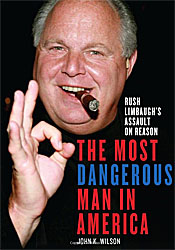
For example, a highly critical book about Rush Limbaugh ("The Most Dangerous Man in America"), by John Wilson) sports a photo of Rush himself on the front cover. And given the scathing nature of how Rush is portrayed in the book as an irresponsible, sexist, racist, ideologue, one would expect that Rush signed no model release or provided consent of any kind to have him or his likeness be associated in any way with this book. Obviously, the text is editorial commentary about the controversial radio host, so no consent is necessary for using the photo on the book itself.

But what about the promotion and advertising for the book? Both of those are "commercial" in nature: profits are made, and the book itself is a product. Again: promotion is "commercial use." Full Stop. So, one would think that Rush would have his lawyers find any legal position possible to stop or slow down the supply chain, from the photographer to the stock agency to the publisher. Yet, there it is in full color, used to both promote and advertise the book.

The reason a release is not required is not because this was the photo used on the book, but because this photo—or most any photo—would not cause a common person to believe that Rush is an advocate or sponsor of the book. (If there were a photo of Rush standing proudly next to a poster sized replica of the book, then such a photo could suggest he advocated the book, although the existence of such a photo would be unlikely.)

So, the fact that a photo is used as part of a promotion is a red herring. Photos may be on web pages, in portfolios, and presented for sale, yet the "advocacy" question is not satisfied simply because photos are displayed. There has to be more context to imply advocacy.

This is true of non-commercial uses as well. Non-profit companies often believe they can use photos of people in their materials because they are implicitly "non-commercial." But again, the determining factor is whether the person could be perceived as an advocate or sponsor of the organization.

Speaking of supply chain, note that the photographer who shot the photo of Rush Limbaugh didn't need a release to take the picture or to sell the image; he didn't need to know what the buyer was going to use it for, assuming he was even aware that someone was buying it. Similarly, a stock photo agency can display the image online, which is how the book publisher (Thomas Dunn Books) found it.

The moral of the story is, take "commercial use" out of your vernacular, and only focus on the "advocacy" question. And while that's the right place to start, such assessments are not always easy; people disagree on specific cases and argue incessantly.

A common example is photographer's own self-promotional pieces. Naturally, most believe that these are "commercial use" of images, but again, that's not the sole trigger. Most images used as part of a piece that promotes someone as a photographer is almost universally interpreted by the public as "examples" of the artists' work, not necessarily as advocates for them. Such an assertion would require text, often in the form of a quote praising the photographer's work. That context would require consent from the person depicted.

As for being in the business of selling photos, photographers are never responsible for having to know the answer the "advocacy question." Someone else is going to publish their pictures, which means that the buyer bears the risk. Photographers or stock agencies can't be responsible for how other people use the images they acquire, especially because one can't make the advocacy assessment until the photo is ultimately put to use, which is long after the financial transaction took place.

Lastly, there are portfolios: Photographers do not need releases for photos for these.

First, a portfolio is rarely considered a "promotional" item, unless it's put together very poorly. Professional portfolios consist of a collection of artistic works that demonstrate the skills and talents of the photographer. For any given image to be interpreted as to suggest the subject were an advocate for the photographer, particular text would have to be used, which is not typical for a good portfolio, which means that permission is not required in order to use photos of people. This includes all forms of publication of the portfolio, whether in physical form, or as a website, or other media.

The one thing to be aware of, however, is that sometimes photographers take pictures of people in special, "closed sessions," where an agreement was made ahead of time—before the photo was taken. If a subject posed for a photographer with the pre-arranged agreement that the photos would not be used in a portfolio or any other manner, than that agreement takes precedent. (Of course, a new agreement, such as a model release, can supersede it.) Such an agreement would have to be established first--it cannot be retroactively enforced.

That said, any good photographer would honor such a request, even if he or she didn't have to.

Labels: , , , , , , , , , , ,

Wednesday, September 28, 2011

Busting Myths about Model Releases

The internet is a virtual echo-chamber of facts and myths of all sorts. When something goes viral, there's no stopping it. Even the most blatant falsehoods can perpetuate for years if they cause no harm in believing them. An example is the myth that the different regions of the tongue tastes different types of things: sweet in the front, sour in the back, etc.. In fact, all taste buds are identical, but the myth started from a single, faulty study in the 1800s that was published in a school text book, and it's been repeated ever since.

In the photo business, the greatest myths are those involving model releases. If you have ever considered selling (or licensing) photos on your own, or through a stock agency, you've probably been told that photographers need "model releases" to sell photos of people, and "property releases" to sell photos of buildings and the like. Some stock agencies actually reject images unless these photos have releases.

While it's true that model release are necessary for certain situations, the actual laws about these issues are deep and complex. As rumors and hearsay perpetuate on the net, the over-simplification has resulted in virtually all the "advice" and conventional wisdom about model releases to be entirely wrong. And the reason why these myths perpetuate is because they cause no harm. No one ever got sued for having a model release. So, people follow the advice because they (and others) seem to be safe, perpetuating the myths.

So, why address the myths about model releases? Because photographers are losing enormous opportunity by not trying to sell the images they don't have releases for, and by going to great lengths to get releases they don't need. Despite the rumors, most publications of photos are not the type that need releases anyway, resulting in an enormous market of buyers. Most photographers could continue to have very successful businesses without ever getting model releases, all while doing exactly what they are doing today. Sure, releases are important for many types of publishers, so if you do get releases for their benefit, you can expand your buyer base by getting them. But it's a proportionally smaller market than people think, and the time, effort and resources necessary to properly obtain, manage and catalog releases is rather substantial. This investment will rarely be offset by the incremental income from sales of images that actually do require releases.

This article attempts to help the photographer looking to make money by setting the record straight on the most common myths about model releases.

Fact #1: You do not need a model release to take pictures.

Nuff said. Don't let anyone tell you otherwise. Everyone in the world has a camera on their phones, and photos are taken constantly. You don't need someone's permission to take their pictures. Now, just because you might eventually intend to sell your photos has nothing to do with the ability to take pictures in the first place.

Fact #2 You do not need a model release to sell pictures. And "profit" has no effect on whether a release is required.

First, newspapers buy photos, and their use of the photo is unlikely to need a release. So, selling a photo (and making a profit doing so) to a newspaper also does not require a release. And because the law does not require you to have any knowledge of the buyer or their intended use of a photo, you are always allowed to sell photos without a release.

Fact #3 You do not need a model release to make photos available for sale, either on your own website, or through a stock agency.

If one can sell a photo without a release, one must also be able to "make photos available for sale" without a release. This includes the publication of such photos in a manner that would allow potential buyers to find them.

The legal case that established precedent for this was Corbis vs. James Brown, where the judge called the depiction of a photo as being for sale a "vehicle of information". Here, consent from a subject is not required.

Therefore, one can make photos available for sale in any manner of publication and media, whether it's traditional print or online formats, including personal web pages, photo-sharing sites, social media sites, stock photo sites, or mostly anywhere.

For detailed information, see the article, Model Release Primer.

Fact #4: A "property release" is NOT required to sell or buy photos of buildings or people's personal property (like land).

The root of this misunderstanding is complicated. The term "property" in an actual "property release" refers to two particular forms of intellectual property: trademarks and copyrights. Examples include logos, designs and other works.

Now, just because these are "protected" works, it doesn't mean that one cannot publish photos of them. It only means that the manner in which such works are depicted cannot cause confusion among the general public about who "owns" the properties, or other legally complex factors. It is impossible for a photo of a bottle of coke to cause the general public to suddenly think that the Coca Cola company was now owned by a freelance photographer in Topeka. If the photographer sold the image to a publisher, and the publisher's use of the image would imply that it had a unique and special business relationship with Coke, then that would trigger a trademark infringement claim. But that would be with the publisher, not the photographer, nor the stock agency that sold the image. Furthermore, such an infringement couldn't possibly happen by merely the photo being printed. Text around the photo would have to give this impression. And, since the photographer or anyone selling such a photo cannot know or control how a publisher uses a photo, they could never be held liable for the infringement.

Like the myth about the tongue's different taste regions, the history of the "property release" stems from a single misimpression from long ago. Certain physical structures, such as the Golden Gate Bridge and the Transamerica building in San Francisco happen to be registered trademarks. And, they have been infringed upon inappropriately in the past, but these were cases that have nothing whatsoever to do with photography. And at the time, news of these suits briefly caused publishers to shy away from publishing photos of such places unless photographers could provide property releases for them. Those releases were not for the buildings, but for the right to use the trademarks. This was very short-lived, however, because it is impossible for photographers to obtain "true" (and legally valid) property releases for trademarks without paying enormous sums of money. So, even though the publishers stopped asking for those releases, the rumor perpetuated nonetheless: photographers erroneously interpreted these requests as "mandates" that all photos of buildings required "property releases." And they've been behaving that way ever since.

To be crystal clear, property releases are not required to sell or resell photos of buildings and other real estate (or physical property of any sort, such as land, pets, livestock, homes, etc). If something happens to be a registered trademark (building or otherwise), then the publisher will already be quite aware that they are the ones that need to obtain permission from the trademark owner (which may not even be the building owner). Any permission obtained by the photographer would be entirely useless to the publisher. In fact, every single property release used by photographers gives no legal right to use a trademark, and since buildings and other items do not require consent for photos of them to be used, these property releases are worthless pieces of paper. But they also cause no harm.

For more, see Photographers' issues concerning trademarks and photography.

Fact #5 You usually do not need permission to shoot pictures of (or on) private property.

While it's true that property owners can restrict photography, that's not saying much. They can also stop you from picking your nose. It's their property, so they can stop anyone from doing anything. You've seen signs that say, "No shoes, no shirt, no service." There's also the sign that reads, "We reserve the right to refuse service to anyone." In short, property owners can apply restrictions indiscriminately and inconsistently and arbitrarily.

But, the owner has to proactively take an action to prevent you from doing things. It's not that you're prohibited from actions by default, and they then grant you permission later. So, most of the time, there are rarely (if any) actual restrictions property owners enforce.

This includes taking pictures. It's permitted by default, and to prevent it they must take explicit actions, including (but not necessarily limited to) posting signs, as noted above. If you are not stopped (or are given reasonable advanced notice), any photos you take are legitimate, and can be sold legitimately. (See later section on "ownership.") Further, one may not retroactively enforce their restriction. That is, if you were at a private event, and then later told you were not allowed to take pictures, it has no affect on your photos or your ability to sell those images. (Publishers, on the other hand, may need releases if the nature of the publication would require it. But that doesn't affect the photographer's liability.)

So, if you're in a bar, or in an amusement park, or touring a winery, you are allowed to take pictures unless you're told not to while you're there. And if you do take pictures, you can sell them to any buyer willing to assume the risk, if any exists.

Sometimes, photographers will often seek permission to shoot pictures ahead of time. This is not only unnecessary, but invites someone from stopping them. If you know ahead of time that you will need permission, that's another story.

Fact #6: You do not need releases for Art, Books, Exhibitions, Presentations, Fairs, Contests, Postcards, Calendars, Etc.

At the risk of over-simplification, the only time a release is needed is if a person can be seen as supporting or advocating an idea, product or service. True, there are often disputes about whether a given publication of a photo of someone could be construed in such a way, but the dispute gets closer into the safety zone when that publication is a form of artistic expression. The First Amendment of the US Constitution protects "artistic exhibitions" (and publications) as a form of free speech, so consent from anyone else—by definition—is never required. Money or profit has nothing to do with whether a work is published or "depicted in an artistic manner."

Again, people argue frequently about whether such depictions are, in fact, artistic in nature, which leads to a complex argument: is it art, and if not, is it a promotion, and if so, is it the type of promotion that should have required consent from the person in the photo?

While these are all good questions, the reality is that no one has ever successfully won the argument that a model release was necessary for a photo that was used in a book, in an art gallery, or at a fair, or any of the items in the above list. In short, the law is on the side of the First Amendment by default - a claimant bears the burden of proving otherwise, and that's a difficult and very expensive bar to clear. While is indeed a very deep and complex subject, those wishing to seek quick answers can feel relaxed: "don't worry. You're fine."

For for more info, I encourage you to read this.

Fact #7: Photographers do not need releases for photos in their portfolio.

A portfolio is a collection of artistic works that demonstrate the skills and talents of the photographer. Permission is not required in order to use photos of people in a portfolio. This includes all forms of publication of the portfolio, whether in physical form, or as a website, or other media.

The one thing to be aware of, however, is that sometimes photographers take pictures of people in special, "closed sessions," where an agreement was made ahead of time—before the photo was taken. If a subject posed for a photographer with the pre-arranged agreement that the photos would not be used in a portfolio or any other manner, than that agreement takes precedent. (Of course, a new agreement, such as a model release, can supersede it.)

For more on this, see Personal Privacy and Model Releases

Fact #8: Posting photos online is just another form of publishing.

What determines the need for a release is whether a photo makes someone appear to support, advocate or promote ideas, products or services. The medium itself is irrelevant, whether it's traditional physical media, or online/electronic media. One cannot say whether a release is required for photos "posted on the web" because it depends on the way the photo depicts the person in it.

When photographers put images on their professional website, they think that this suggests that the people in those photos could be construed as sponsors or advocates, but that's not complete. Putting photos online to "sell" does not require a release, depictions of "art" do not require a release, and a "portfolio" does not require a release. The only way a photo would require a release is if the photographer created a self-promotional piece (such as an ad) that promoted his or her services, and used a photo of someone that might suggest it is a client.

Fact #9 Ownership of physical pictures and ownership of rights are different.

When people hire photographers to take pictures of them, they think they own the photos, or have rights to publish them. They don't. This has to be agreed upon, usually ahead of time (but it can be negotiated later.) Normally, this isn't a problem. But where things break down is when subjects don't like the photos of themselves. Here, they try to demand them back, but they don't have this right. (They also cannot retract permission if it's been granted in writing, such as a model release.)

The same thing is true of pictures taken on (or of) people's property. They think that because it's their house, or their private event, or their pet, that they have the rights to the photos. They don't. Nor can they stop the photographer from publishing those photos. Non-humans do not have inherent rights, unless protected by trademark or copyright.

Concusion

The reality is that photographers (and stock agencies) don't get sued for the publication of an unreleased image. And given the very high cost of suing someone, litigants are usually told by their lawyers to go after the "publishers" of the images in question, as they are the ones who bear the true legal liability.

As an active photographer, understand that most people are entirely uninformed about model releases, and factor this into your business dealings. Publishers, stock agencies and many others may vehemently demand a model (or property) release before buying photos, or for accepting your images into a stock agency. Despite their being wrong, this is the way of the world, and you can only do what they ask, or don't play.

But don't underestimate the sales potential of your unreleased images, and the large market of buyers who don't make such demands.

For those with interest in reading the details, I have many articles that answer all the technical questions, like this one and this one. I also wrote a book called, Photographer's Guide to Model Releases.

Labels: , , , , , , , , , , , , ,

Wednesday, April 21, 2010

Model Releases: Pro Models and Their Agencies

I got an interesting email from a fashion photographer that warrants some discussion:
A model agency booker recently wrote to me saying: "But if you want to use the images for editorial use, we ask that you ask us first before agreeing to the usages used for that magazine. In fact, all magazines require releases...even for editorials. That's where the release will come into play."


First, the quote that you included from the agent is a bit misleading, though he might not be aware of it. That magazines "require" releases doesn't mean that they "are required" to have a release for publication. It just means that many magazines have a policy to only publish released images, even though one isn't actually necessary.

As I will discuss, this creates more liability for them, not less. It's also a great disservice to the industry because it perpetuates incorrect information about how and why model releases work.

First, let's talk about context: Fashion photography is different from grab-shooting in the street because someone is specifically asked to pose in a controlled and staged environment, and to take specific pictures for a specific purpose. The model is not subject to a condition where he or she can be photographed "without being aware of it," like on the street. Instead, the model is only willing to do it in exchange for something. For example, money.

Now, if it were just money, that's one thing, but in professional fashion photography, it is often the case that models also insist that you (the photographer) and your assigns (those to whom you license the images) only use the photos for a specific purpose.

It's the phrase "..and your assigns..." that you will need to think about. I'll bring it up again soon.

What makes this situation different insofar as model releases are concerned is that the model has stipulated the uses of the images -- not the photographer. Thus, the photographer is now assuming liabilities. This is atypical for most photographers, who are used to being the ones who spell out the terms of the model release (and ask the subject to sign it).

In this inverted photographer/model relationship (from the norm), focus is now centered on the models themselves: they are the ones that are seeking protection...in this case, their professional careers. They don't want images of themselves used in ways that might compromise their modeling relationship with particular designers, advertisers, or even editorial relationships. They also need to control how they are portrayed in the press to the degree that they can. In this case, if they are going to be wearing clothing that would not bode well in publications, they would not want those photos to be published. That's why they are eager to assure that the photographers that take their photos are restricted in what they can do with the images.

If the model has an agency, those agencies would (should) instruct their clients (the models) not to attend photo sessions without requiring the photographer (or other agents there) to sign the agency's release.

Now I get back to the quote from the above agency representative, where he says, "for editorial use, we ask that you ask us first..." He can't enforce that without strictly saying so in the contract the photographer signs. That's why he says, "we ask..."

But, if he truly wants to enforce that policy of "ask first", he should stipulate this requirement into his template model release agreement that photographers sign. An even stronger provision is simply to state up front that the photos "can only be used under specific conditions," such as for a particular magazine, in a particular story, to be published on a particular date. By definition, this would exclude all other uses--including editorial.

Liability
Given all that, where does liability reside if the photo ends up somewhere else that isn't covered by that agreement? What about that editorial magazine?

Answer: it all depends on the language inside the model release.

If the photographer signs a release that lists specific uses only, and the photo ends up in an editorial story not covered by that release, the photographer--not the publisher--is the first in line for liability: he violated the contractual agreement.

What about the magazine? Aren't they liable too? Yes, but only if they were assigned the images and were made aware of the restriction of use ahead of time. That is, if they knowingly published an image in a manner that they knew was in violation of an agreement that they are a party to.

That's a big "if", and one that can easily be avoided.

Strictly from a legal perspective, it is in editorial publishers' best interests to not ask for model releases from photographers, because that would then make them aware of restrictions that they would then have to comply with. Any lawyer will advise clients never to assume liability of someone else's contract, even if it looks clean as a whistle. It just wraps you into the same risk as the photographer. This is precisely why most newspapers and other top-flight periodicals not only never ask for model releases, they indemnify themselves from any obligations that the photographer might have agreed to with the subject of a photograph.

So, let's say the photos are used in an editorial article on a particular line of clothing where the model does not have a relationship with the designer, there could very well be many displeased parties. In this case, the liability is not held by the magazine: it didn't violate anyone's privacy because it didn't perform the act of taking the pictures (or pay for it), nor has it violated publicity rights because the magazine or article is not a paid advertisement by the designer. Assuming that the magazine simply got a hold of the photos without agreeing to be "assigned" the image under typical license terms, it is entitled to publish them in an editorial context under the protection of the First Amendment.

That editorial publishers of all sorts even ask for model releases (or property) releases is silly -- they assuming more risk by doing so.

This is not the same as commercial publishers, of course. For example, if the same image were published in association with an ad for another product not covered by the agreement, that company would be liable for violating the model's publicity rights, and the model could sue that publisher for damages. The model would also sue the photographer (again, for violating the contractual agreement), but this is separate from the commercial publication of the image.

Remember again, this all falls under the premise that agencies and their models only agree to only be photographed under conditions where photographers sign releases that have language restricting the use of images to specific publications and uses.

No (or vague) Model Releases
Without such specificity, rights of the model and the agency begin to erode. On one extreme, there are very open and vague release, such as the ones most photographers clip out of books (including my book on model releases). Most pro models won't (or shouldn't) sign these, unless they are early in their careers and are still establishing themselves. (Once you become more well-known, you will then have a stronger brand that you will not only need to protect, but will also have more opportunity to capitalize upon by commanding a higher price for publication rights of yourself. Even editorially.)

If there's no release at all, then licensing an image to an editorial publisher is risk-free. That is, judges would assume that anyone that willingly sits in front of a photographer without a written release has willingly waived his rights of privacy. (This has nothing to do with commercial publication, however. Licensing is still permitted, because it doesn't violate a contract. Publication is a liability born by the publisher. For more information on this, see Model Release Primer.)

If a subject has an issue with an editorial publication of his image, it's usually the case that things are a bit messy. If someone were to bring a complaint against a photographer or publication, some kind of harm must have been done. (If no harm has been done, and no release has been signed, it's a losing case.)

If harm has been done, and no release is signed, a judge will gather other facts, such as an email that might have been sent beforehand saying, "Ok, I'll do the photo session for $50 if you promise not to publish them on your website." While a court is permitted to take this into account, it isn't an open and shut case--the judge has to weigh the two factors between the verbal agreement and the degree of harm that's been done. You can imagine extremes on your own. If it's a toss-up, courts (in the USA) generally give deference to First Amendment rights -- the right to publish -- over publicity rights. The hardest ones to judge are those that involve publication rights and privacy rights.

Good luck with that.

The summary is that professional models should almost universally be trained to provide their own model releases, but do so judiciously. If you're too restrictive, no one will want to work with you, nor will anyone pay you. (Remember, you have lots of competition.) Photographers don't necessarily "need" releases to protect themselves, but those releases will make the marketability of such images much better.

If both the model and the photographer have releases and there's a stand-off, it's time to negotiate: find what each party "needs" from a financial point of view. Don't worry about "liability." This misperception that releases are there to "protect" photographers has kept many photographers from capitalizing on their photo assets. Negotiation should really be about the scope of publication: use, geographic, and term (expiration time). Oh, and money. :-)

Labels: , ,

Saturday, April 12, 2008

When Editorial Uses of Photos Require Model Releases

Recently, I've noticed a big increase of discussions on photo forums involving questions of whether model releases are necessary for certain types of shooting conditions. What struck me is that so many of these questions were about the need for releases for editorial uses, a form that normally doesn't require model releases anyway.

Here are some examples that came up in discussions, all of which share a common theme.

  1. You're a wedding photographer and you're shooting the bride and groom during a ceremony at their home.

  2. You're an equestrian photographer on a "farm call" to photograph a horse at the owner's stable.

  3. You're an art photographer and you're at an artist's studio to shoot a few pictures of his latest sculpture that he will send to his agent, who will then send them to magazines for a press release.

  4. You're a portrait photographer and own a studio at the local mall. A client comes in to have pictures taken of him so he can distribute them to potential modeling agencies.

  5. You're a press photographer, and develop a special relationship with a congressional candidate, who invites you to the family estate to photograph the clan for a memoir they intend to publish about the personal tolls that political life can have on a family.
Though there are contracts associated with each of these assignments, none of them include model releases by the subject for the photographer. Here's the question: can you license any of these photos for EDITORIAL use to a newspaper who is doing a story on the individual who is the subject of any of these given photos?

Most people would say no, and would guess that it's because of the lack of model releases. True, but the more important (and harder) question to ask is: why? After all, as you may know, model releases aren't usually necessary for editorial uses of photos, and you can't get more "editorial" than a newspaper story. So, what makes these cases above so different that model releases would be required for an editorial publication?

Here's where almost everyone will now guess wrong: they'll say that the photography was done on private property (or "of" private property).

That's not it.

What matters are the laws governing "personal privacy," and the fact that the property itself may be private and/or personal is actually not a factor here. Privacy laws protect people's rights in ways that transcend issues of "property" entirely. This may include conditions where 1) people waive their privacy rights even on their own property, and 2) people preserve their privacy rights on public property. So, the first thing you need to do is dispense with the notion that "property" has anything to do with privacy--at least, insofar as the publication of photos in editorial contexts is concerned.

The other thing you need to immediately forget are the high-profile cases concerning "violations of privacy," such as breaking and entering, intruding on personal space, planting hidden cameras in people's homes or in the workplace, or using brute force methods to get pictures. In short, stop thinking about just those cases that involve "aggression." While such aggressive techniques do violate privacy laws, these are obvious. What's more interesting--and which is far more common--is where photographers can violate privacy laws in very passive ways, even including situations where the photographer has written permission from the photo subject to photograph him. The cases listed at the top of this article are perfect examples.

Here's how you need to think about privacy laws from the top down:

Does there exist "a reasonable expectation that one could be photographed by the general public without the person's knowledge"?

What is the relationship between the photographer and the subject?

How much "orchestration" was necessary in order to capture the photo?

Each of these requires discussion, so let's address them individually. After that, I'll tie them all together to present a real-world scenario that everyone can identify with.

The first item is the most important because it lies at that pivotal dividing line between personal rights and that of the First Amendment (which affects freedom of the press). That dividing line means that people are entitled to "privacy" when they're in certain conditions, but they waive their rights in other conditions. The easy cases we all know about are: when you are in public, you can reasonably expect that you could be photographed without your knowledge. When at home, you can expect that your privacy is protected from such photography. Easy enough, but it gets complicated when you introduce other conditions.

For example, each item in the following list is a private property: an amusement park, a bar, a zoo, your swimming club, your golf course, your church. In each of these cases, the general public can come, and they often have cameras with them. Hence, everyone on the premises has waived certain rights of privacy insofar as their photos being taken by others, even though the property is "private." Don't necessarily take this as a universal truth though; there could be specific venues where photography is prohibited, thereby changing one's "expectations" of being photographed. Still, once again, don't take that as a given either. Just because a venue may say there are prohibitions, doesn't necessarily mean the expectation goes away. It's not enough to just see signs that say "no photography," or a warning on the back of a ticket stub that says you can't take pictures. And you certainly never rely on your opinion that people shouldn't be taking pictures. If the rule is not enforced, and you still see people shooting away without intervention, the expectation of being photographed still exists.

True, one could argue this case to a judge, and one may get some leeway because of this, but the judge will weigh other factors as well. He's going to be as objective as possible by looking at the behaviors of others in the environment and assessing what's actually going on. If many people are conspicuously taking pictures, whether they're allowed to or not, this will be considered. On the other hand, if security personnel are stopping people from taking pictures, then it can be argued that the expectation of being photographed is reduced. Between these two extremes lies the reality of the situation.

Consider a celebrity who argues that he only showed up at the event because he was promised that no photos would be taken. If it was clear that the ban wasn't enforced, and there were people taking pictures everywhere, and he had an opportunity to leave before being photographed, he may have a hard time convincing the judge that his privacy was violated by the photographers. Separately, he may have a claim against the venue for failing to enforce the photo ban, but the judge will consider that the conditions at the event were obvious and the celebrity had an opportunity to leave. By staying anyway, he subjected himself to a "reasonable expectation that he would be photographed." If you're one of the lucky photographers that got a photo of him, and that photo ended up in the newspaper, you haven't violated his privacy. That's editorial publication, and the photo doesn't need a release.

So, the fact that you're on private property is inconsequential. Indeed, there are cases where you can be in a public place and still have your privacy rights protected. How? This gets into the second point above: what is the relationship between the photographer and the subject?

To illustrate, consider the scenarios listed at the top of this article. In each case, the people being photographed asked the photographer to do so because they wanted the pictures for themselves. Even if they are for publication in the general press, that part is irrelevant insofar as privacy rights are concerned. It is the direct invitation to the photographer by the subject to shoot a specific thing which implies that the subject has not waived his privacy rights. Thus, the photographer's use of any of those photos requires consent from the subject (in the form of a model release). Yes, including for editorial publication.

Note that this does not affect copyright status--the subject is not suddenly the owner of the photos, nor does the relationship imply a work-for-hire scenario. It's simply a matter of privacy, and the scenario involved means that that no one has waived any rights.

Once again, note that "private property" has nothing to do with anything here. Whether the photo session was on public or private property, the photos taken by the photographer in question are restricted due to the circumstances involved.

Back to the "relationship" factor between the photographer and the subject: The alert reader will note that, if the photo session is on public land, one cannot necessarily assert privacy rights to others. Not every person with a camera is "the photographer" with whom the subject has a relationship. Consider a couple that hires a wedding photographer to shoot their ceremony, and that ceremony happens to be in a public park. Only the hired photographer is bound by the agreement made by the couple, so the photographer has no rights to license those photos. However, because the ceremony is in the public, other people who have cameras, such others at the wedding or uninvited bystanders, can each shoot all they like, and license those photos to others for editorial publication or any other uses that do not require model releases.

The special relationship between the photographer and the person that hired him has been upheld in court cases, especially those involving weddings. Judges' rulings have maintained that people's expectations of the service that the photographer is providing is one in which they can reasonably assume that these photos are for their personal uses.

To illustrate the strength of this relationship's effect on the need for a release, consider the scenarios I described involving an artist and his sculpture, or the owner's horse. Normally, only photos of people require model releases because animals and objects don't have privacy or publicity rights. But, there still may be restrictions on the use of these images because of the privacy laws involved and the "relationship between the owner and the photographer." The fact that the photographer was invited for the purpose of providing a service puts limitations on all the photos taken during the session.

What's further interesting is that the strength of these cases have been decided on the weight of another factor involved, which leads us to the third item on the list: to what degree was a photo "orchestrated."

When it comes to orchestration, the idea is that the more involved the photographer and subject are in coordinating how photos are taken, the more "invasive" the photographer is on the privacy rights of the subject. Remember the first rule, where a subject waives his rights of privacy if he can be photographed without his knowledge? Clearly, if the person is unaware he's being photographed, his actions are of on his own free will, and anyone that witnesses such acts in a public space is entitled to publish photos of them in an editorial context. But, if the subject is directed in a controlled situation, he is no longer acting on his own accord--he's doing what he's told to do--so photos of him may not necessarily be representative of him. Even if he's agreeing to be photographed, he still maintains some rights of privacy.

Now, understand that this is purely academic right now, and real-world situations may present very gray areas. For example, just because you ask someone to pose for a picture doesn't necessarily mean that they are now "being directed." And though you may still be safe if you ask them to wave, or stand next to a building, or even spend considerable time with them in a casual or candid manner, you can see that each of these progressive acts leads you closer to that gray area; the point at which you cross into the "privacy" zone is rarely clear and has to be evaluated on a case-by-case basis.

So now, let's pull together all three of the checklist items, and consider a case that involves them all: you're hired by a restaurant to photograph the dining room with people eating. Here's a complicated situation because we have many people involved, a variety of conditions, and possibly some "direction" by you to the patrons. So, let's piece it all together.

First, unlike the restaurant owner, the diners have no relationship to you at all, so the first question remains the most important: "is there a reasonable expectation that they could be photographed without their knowledge?" As discussed before, one has to do an on-site assessment: Are others taking pictures? Are you conspicuous with your camera? Has the restaurant owner told the clients (verbally or with a sign) that they might be photographed? Even subtle things like whether it's a quiet, intimate, "private" sort of venue, or whether it's a loud arena-type of pizza parlor, can imply a different perception on whether there's a "reasonable expectation of being photographed."

Assuming there is such an expectation, then the clients have waived their privacy rights, and you can license the photos (without releases) to a client who may publish them in an editorial context.

Next is the question of "orchestration." Are you simply photographing the room, or are you having people pose for you? Is it a simple shot, or are you directing a man and a woman (who don't know each other) to clink their glasses together and gaze into the camera? Are you adjusting the smile? Fixing hair? The more you get into these actions, the more likely it is that your orchestration begins to threaten their rights of privacy if these photos were published without a release, even in editorial contexts. You haven't violated anything by taking pictures; it's the publication of them (or the licensing of them to someone else who can publish them) that could be.

Assuming there is no orchestration, and that people were aware that they were being photographed, you can license these photos for editorial purposes to any buyer.

Oh, Wait! Had you forgotten that it was the restaurant owner that hired you? He's the one that wants to use the photos. Is he aware of all these issues? Probably not at all. So, as the hired photographer, you have to be aware of them so you don't get your client into trouble when he publishes the pictures.

You might think that it'd be easier if you just had everyone sign releases. Well, again, in the real-world, that could cause more trouble than it's worth. Diners don't want to be bothered with that as a group, so you would really only want to do that with people with whom you've given direction, or who may appear to be "advocates or sponsors" of the restaurant. Why's that? Because the owner probably wants to use these photos for promotional purposes, and for that, he would need model releases from anyone that could appear to be "advocates or sponsors." Note that model releases are not required from people who are simply part of a scene, even if they are recognizable, and even if the use is commercial (advertising or brochures). What triggers the need for a release in a commercial use is if the people appear to be "advocates or sponsors." So, if one of the pictures you took is of a couple clinking their glasses looking directly into the lens, and the picture is clearly on them, they would have to sign a release for the restaurant to use their photos. On the other hand, a wide-shot photo of the entire room with everyone eating at their tables (not looking at the camera), none of these people would need to sign a release. This applies to both the commercial and editorial uses by either you or the restaurant owner.

Got all that? Well, we're not quite done yet. There's one more important factor in the "relationship" section that hasn't yet been brought up: one in which the photographer asks the subject to participate in a photo shoot, rather than the other way around. In each of the scenarios discussed so far, the subject asked the photographer to be photographed. But, what if you're the one to call the farm and ask owner if you can bring a group of photographers (perhaps students) to do a photo session of the owner and his horses? This is a subtle but important difference that could change the entire landscape of whether releases would be required for editorial uses.

Another way to look at this is to ask, "what is the purpose of those photos?" If the subject hired the photographer, he knows what the photos are for, and his expectations about how they are used have been set. If the pictures were to later show up in the paper, it would be a dramatic difference to his expectations than if you asked the subject to photograph him. Here, his expectations of the photos are simply undefined, and this subtle difference weighs very strongly insofar as determining whether his privacy rights have been violated. For instance, he'd have an easier case to make if he could say to the judge, "I hired the guy to photograph me and my horses so I could have prints--imagine my surprise when they showed up in the paper." This is a stronger case than if he said, "These guys asked if they could take pictures of me, and a few weeks later, there I am in the paper." Here, the difference in the preconceived expectations carries weight as to whether the farmer's personal privacy has been violated.

Again, individual cass can be argued, but I illustrate the difference here because one scenario is a stronger case than the other. And when you factor in other instance-specific details, the pendulum has a tendency to swing in unexpected directions quite easily.

And finally...

You may recall that in the beginning of this article, I said there was a contract between the parties in each assignment. But I didn't say what was in those contracts so we could focus on understanding the concepts involved. Now that that's done, we can go back and revisit the contracts and see if the terms alter anything we've assumed.

First and foremost, if the contract is "work-for-hire", then the photos aren't even yours in the first place. You have to hand them over to whoever hired you, and you're done. You have no rights to or legal access to those photos (unless, of course, the client chooses to let you have them). A work-for-hire contract has to actually use that phrase.

Assuming it is not a work-for-hire contract, the client's own use of the photos are limited to personal use only. I had mentioned in several of the examples that the clients were going to publish the photos in some form. Technically, because you own the copyright to the photos, the client cannot publish them at all without permission from you. Assuming that it was the client's intention to publish them, we can assume that the contract specifically stipulated the right to use the pictures for the stated uses. However, just because the client can use the pictures in the manner stated, it does not affect your use of the photos insofar as the model release requirements are concerned. That is, if you performed a portrait session with a client who had you sign a contract saying that he's going to provide these photos to a stock agency who will license them, he has the right to provide them to the agency because it was written into the contract. You don't, unless you have a model release from him. Otherwise, you've violated his privacy rights because he came to you to get his pictures taken.

And that brings us to the last point: while it's important to understand all these issues raised here, the best business decision you can make whenever any signed contracts are involved, is to include language that outlines the terms of a model release. That would make the entire discussion moot. And provided that the release language is broad, you could even license all the pictures discussed here for commercial uses. The one exception would be the restaurant scenario because other people (other than the owner) may be involved. The owner can't sign on behalf of clients, so those people would have to be dealt with individually.

Labels: , , , , , , , , , ,

Tuesday, February 26, 2008

Model Releases: Why US laws are important to non-US photographers

Since I posted my announcement of my model release book, the most frequently asked question has been, "Why do you only focus on US laws? What about the rest of the world?"

To understand that, one must first get familiar with the nuances of how and why model releases are necessary. For that, I urge you to read my model release primer. There, you will learn that the liability of publishing an unreleased photo of someone is not the photographer's, but the publisher's. In other words, your client. Whoever buys photos from you is the one that can get sued if the person in the photo hasn't been released. Despite popular misunderstandings, photographers don't get model releases to protect themselves, they get model releases so they can broaden the market of buyers of their photos. A released photo has a better chance of selling than an unreleased photo. (And sometimes, for more money.) So, if your business is to sell as much as possible, you want to broaden that range of buyers to the widest possible audience.

Now, if you're a photographer in France or Germany thinking that because all your clients are local to your country, you don't need to worry about US laws, think again.

There are two very important truisms about the photo industry: First, the US is where most photos that would need model releases end up because international trade and other matters of globalization. In other words, the US is a target market for most everyone now, even if indirectly or unintentionally. Making matters more critical is that the US has some of the most punitive laws protecting people's privacy and publicity, and they can apply to anyone, not just US citizens. Statistically, people sue in the US over such matters more than any other country, and the damages are very, very high. This all adds up to very paranoid companies that want extra protection. Indeed, anyone that does any kind of international business at all will be very cognizant of US laws, and may only license images that have releases that satisfy US laws.

You see, US laws begin with where an "infringement" took place. And in today's world of global distribution of content, either in print form or over the Internet or on TV, that could be the US. Where that is is called "jurisdiction." Since it is the publication of the image that triggers the need for a release, the question is whether any of the following entities reside in the US: the publication, the company that published it, any of its business associates (such as sales reps, etc.), or even the target audience they are advertising to. If any of these entities exist in the US, it is said that the publisher has "presence" in the US, in which case, a suit can be filed in the US under US laws. This is true regardless of the nationality of any of the parties involved. If you are from another country, and take a picture of someone in another country, and license it (without a release) to a non-US company, but they used it in an ad in a magazine that is published or distributed in the U.S., the subject could file a claim against that company in the US under US laws.

Because of this, international companies that advertise in international magazines, or on the internet, or on television must be cognizant of laws that apply in each of the countries in which it has "presence." While that may sound onerous (it is), I come back once again to my earlier point: the US has some of the most punitive laws and litigious culture than any other country. So, it is more likely that a company that complies with US laws is probably covered for most other countries as well. And you want to sell photos to those companies.

Oh, you may object to some legal details if you like. Yes, I'm simplifying to some degree, because proving that a company actually has "presence" in the US could be onerous as well. Clever lawyers will do their darnedest to refute such broad interpretations of law in other countries. But, clever lawyers act on behalf of the plaintiff as well, so this sword cuts both ways. Still, it's true that a local German company that sells local beer to a limited geographic region is not going to get called into a US court just because they happen to have a website that has an unreleased photo of someone and that website can be seen in the US. It'd be hard to convince a judge that there's any real "presence" there. So, let's not get carried away with ourselves: not every use of any photo is suddenly subject to US laws or courts.

But, again, let me remind you of your job as a photographer: to cast the widest net to catch as many buyers as possible. If you are knowledgeable of (and comply with) US laws in your photo business, you will not only get more potential US-based buyers of your imagery (not a small market by any measure), but you'll have a better reach for your local buyers as well. And that's really what this is all about.

For completeness, there's the other side of the coin that may surprise many people. If you took a photo of an American citizen and licensed it to a magazine in Cuba, where there are no such privacy or publicity laws, the infringement took place in a jurisdiction where no such protections are provided, and no claim can be made. The fact that the subject is American is irrelevant. You can publish naked pictures of Paris Hilton in Cuba and she can't sue you. (Of course, the Cubans authorities might not take too kindly to it, but that's a business decision you'll have to make.)

In summary, U.S. laws still apply if you license images to clients that publish in, or distribute to the U.S., which covers a lot of international media. Regardless of where you live, or to whom you license photos, your clients may need to consider U.S. laws, which, in turn, can affect business decisions you make. So, it's in your interests to understand US laws.

And yes, this is all covered in my new model release book. And, for what it's worth, the combination of the low value of the dollar, and some really great postal rates I've gotten, it's a bargain when you buy it on my website.

(NOTE: the shameless bit of self-promotion you just saw was that of a sudden switheroo to my being the lowly salesman type. I disavow my actions on this matter, as it was imposed upon me on the advice of my PR rep, who also happens to be me. But that's a technicality that you can take up with any one of my vast arsenal of lawyers in waiting.)

Labels: , , , ,

Sunday, February 24, 2008

Non-commercial uses of images: do non-profits need model releases?

In the spirit of my recent accouncement of my latest book on model releases, I thought it apropos to post a blog entry I have had in the queue for a while: whether non-profit organizations are immune from the need for model releases for whatever they publish: promotions, newsletters, fund-raisers, etc. At the heart of this question is what is meant by "commercial vs. non-commercial use."

It started when I read a blog entry from a site that caters to non-profits. It had this text:

"...if you are publishing a photo for information or educational purposes, not commercial purposes like product advertising, you can typically print it without a model release. The majority of non-profit publications fall into this category."


The premise here is erroneous: that non-profits fall into the category of "non-commercial users." This is not the case, and this misunderstanding lies in what is meant by "commercial use." Most people associate this expression with advertising and promotion of for-profit products and services. Yet, those are not the only uses covered by the law surrounding privacy and publicity laws. And it's those laws that stipulate whether consent is required from a person to publish a photo of them. (A model release is what grants that consent.)

These laws are not based on "commerce" as people traditionally think of it, but around how people are represented, regardless of the kind of business the publisher (user of the photo) happens to be. Whether a person's likeness is being used to advance a cause, an agenda, or any number of things, these are really the core of the intent of the law.

Federal statutes exist that protect people's rights of publicity, and about half the states in the US have additional statutes that go beyond those basic principles. A good example of this is found in the California Code 3344, which can be viewed here.

You'll note that there is no text in any of this language that talks about whether money is made, or the status of the publisher of the image, such as whether it is a for-profit or non-profit. This is not what is meant by "commercial"... Instead, it really refers to "in the course of business," and to differentiate the use from news reporting and other uses protected by the First Amendment.

For purposes of model releases, it's the use of the image that matters, and non-profits are businesses, like any other: they have staff, letterhead, advertising and marketing budgets. This is all part of "normal course of business," otherwise known as "commerce." Accordingly, when they publish photos of people, there may be a need for model releases that applies no differently than for for-profit companies.

Further supporting the notion that the law is not intended to exempt non-profits is the fact that the statute does not define what "services" are. A non-profit that delivers food to the homeless is providing a service, as is a non-profit that advocates humane treatment of animals, or that provides assistance to war veterans, or religious groups that teach reading, or HIV/AIDS groups that provide support services, or gay and lesbian organizations, and so on. If the assumption made by the quote on the non-profit blog mentioned above were true, it would be that these organizations would be exempt from requiring a release from using a photo of someone because they are non-profits. As you can imagine, any one of these organizations may or may not be supported by everyone in the country, so could it really be that they could use photos of anyone they wanted for any reason, without their consent? That's an easy "no." Imagine how upset you would be if a non-profit that advocated a cause you don't support were to use a photo of you in an ad.

This is what federal and state statutes are there for: to prevent this sort of unfettered use of people's likenesses. Nowhere does any statute state whether "money" as anything to do with any of these transactions or companies.

But, don't let this reality jolt make you think that all non-profits have to get releases for all photos they use. And since non-profits are treated identically to for-profits, it may even be more surprising to learn that for-profit companies don't necessarily need releases for all the photos they use in ads either. And this potential lack of a need for a release lies in an infrequently-read subsection (e) of the same California Code 3344, which reads:

The use of a (...) photograph, or likeness in a commercial medium shall not constitute a use for which consent is required (...) solely because the material containing such use is commercially sponsored or contains paid advertising. Rather it shall be a question of fact whether or not the photograph or likeness was so directly connected with the commercial sponsorship (...) as to constitute a use for which consent is required (...)


In other words, the person has to look like they are somehow advocates or sponsors of the underlying product or service. In the simplest case, just because a website, magazine, newspaper, or newsletter may have ads in it does not suddenly trigger the need for a release from the people who may happen to be in photos on the same page. Just having a photo of someone is not the test -- it's whether there is an implied association (or affiliation) between the person/people in the photo and the "user" (publisher) of the photo, or the advertiser. (Hint: you see ads on the same page as articles in newspapers. That's no different than ads on a web page that happens to have editorial content and photos of people. Readers know the difference between an ad and an article, at least in most mainstream publications.)

Obviously, this is highly subjective, as well as highly-dependent on the given photo and the given use. All of this is entirely (and somewhat arbitrarily) up to the whims and opinions of judges. Not that there's anything wrong with that. But, it's this lack of specificity that allows people's assumptions to lead them astray.

In effect, this new understanding of subsection (e) introduces a brand new view that you probably didn't expect: just because someone is recognizable in a photo and that photo is used in an ad, it does not necessarily trigger the need for a release. Subsection (e) states that the person in the photo must appear to be "directly connected with the sponsorship." If you were to have a close-up photo of a person looking directly into the camera with text over his face saying, "I have AIDS," the implied between the person in the photo and the organization is pretty strong. However, a photo of a local band that happened to be playing at an outdoor event that happened to benefit the non-profit could show up in a newsletter to members with a far less likely need for a release. Is there an implied association? Perhaps, but it's far more benign and less likely to be objectionable to the band members (or they wouldn't have played the gig in the first place).

Between those two endpoints is an infinitely large number of possibilities for how someone might look as to determine whether they are "directly connected" to the published use of the photo, and whether that person would be likely to object.

And it's that analysis that leads us to real-world events and how they often don't reflect academic discussion, or even the laws themselves. This is why most non-profits don't think or care about having releases: most of the time, nothing happens and no one cares. But it's still important to mention, because the law is the law, after all.

In conclusion, despite the fact that this was about non-profits, it turns out that they aren't different than any other organization. What this topic is really about is what is meant by "commercial use." It's not what people think -- that money is made or has changed hands because someone's likeness was used. Privacy and publicity laws are written to address people's rights as to how they are represented, and whom they can be implicitly associated with, regardless of whether money plays a role. If a company violates those rights by publishing an unreleased photo that can imply an association, _then_ it becomes all about money. Theirs.

Labels: , , , , ,