Dan Heller's Photography Business Blog Industry analysis from www.danheller.com

The photography world -- the business, the culture, the art, the politics, the technology.

Site Feed

Subscribe to
Posts [Atom]

View mobile version

My Photo
Name:
Location: Santa Cruz, California, United States
My Books on the
Photography Business

Sunday, November 13, 2011

Creative Commons Effect on Photo Licensing

Julie Bernstein asked me the following question: "I am curious if your views on Creative Commons have changed since the four articles you published on this topic in '08."

Julie is referring to these articles (part1, p2, p3, p4) where I describe the CC as a great licensing method for almost all media types except photography.

In summary, what the CC has done is create a legally legitimate infrastructure for those who freely share copyrighted works. Before CC, such activity was technically an infringement, because the the publication of creative works requires consent of copyright holders. CC clears up that technicality, which is great. But it has inadvertently given people the impression that it has affected the licensing industry's pricing structures.

CC has not affected the greater licensing market (or prices), largely because of risk: CC has no centralized authority to assure that content is either submitted properly or used properly. Because it's so easy to game the system on either side of the photo (the supplier or the user can sue the other by luring them with a legally misleading scenario), the financial liability for anyone with a lot to lose is simply too high, especially given that traditional license fees are so minimal. So, the majority of image buyers simply stay away from CC.

Now, this is not to suggest there's something wrong with the CC model in principle. I'm a big advocate for it in all other contexts. Indeed, it was born out of the "free software" meme that was popular in the 1980s and 90s, when Gnu Public License (GPL) and other models were the precursors to the "open-source" model we still enjoy today. These are great innovations in licensing because they allow intellectual property to be used for the greater good, while also allowing for commercial use of those innovations.

But CC in the world of engineering is entirely different from photography. Engineering takes a considerable amount of time, resources and (usually) teamwork to produce anything of value that those in the open-source community would use. As such, the kind of content there is proportionally minimal, and each work is substantial and recognizable, making infringements quite easy to spot.

None of this is true in photography -- trillions of images are produced daily, it's impossible to track any given photo, or whether it is "legitimate" (either by the owner or the user).

So, sure, in a world of honest people that want to freely share their content in a peaceful corner of the image licensing market, CC is great. The CC market is growing, but the perception is only as a measurement of itself, not the total licensing market. An article on that topic can be found here:
http://www.danheller.com/blog/posts/total-size-of-licensing-market.html

Lastly, it's natural to ask, "If CC is so easy to game, why haven't we seen it?" The answer is because the market is so negligible. Economists often use crime data as a reality check on the economic activity they think they're aware of. The higher the crime rate, the more economic activity there is, and there's usually parity between that activity and the presumed size of a commodity's market. If there's little crime, the market size isn't big enough to warrant the effort. If CC were to genuinely gain momentum, it would attract those who would game the system for profit, which itself would have a cooling effect, bringing its popularity back down.

For the record, I've proposed that the best way to assuage people's risk concerns about CC is to use the "copyright registration" system. The CC foundation should have a submission system where those who want to submit images for CC licensing would bulk register those images to the copyright office. This gives them the right to file claims on behalf of the copyright owner, which is how major stock agencies like Getty work. Registered images are eligible for higher level of copyright protection, and there are federal penalties for fraudulent use. This means that users of CC images can be protected from invalid claims by those trying to game the system because this is built into the copyright act's provisions. Similarly, authors can be assured of CC compliance because non-compliant users could be subject to an infringement claim. Yes, you can sue someone for copyright infringement, even if the license fee were zero, because the infringement is another form of "breach of contract." Here, the user of a CC image agreed to the terms of CC by (for example) citing copyright ownership. Failing to do so is an infringement of that contract, and is therefore subject to the statutes provided by copyright law.

This would not only allow CC to have actual teeth, but the trust would go up as the risk comes down.

But such an infrastructure would be quite expensive to operate. That'd be a tall order just to create a system that brings the license fee for a commodity down only a few dollars, even if it is only to zero.

Labels: , , , , , , , , , , , ,

Friday, September 30, 2011

"Commercial Uses" and Model Releases

In my last blog post, "Myth-Busting Model Releases", I received quite a bit of email from people about "commercial uses"of images, pointing to other discussion forums where, again, myths and hearsay prevailed among many misinformed, but well-intentioned photographers.

The common assumption is that "commercial uses" of images require model releases, but that's not actually true. The sole trigger for whether a release is required rests on whether the subject can be perceived as supporting or advocating a particular idea, product or service. True, many "commercial" uses of images do have people appearing to be advocates, and this is where the oversimplification begins. People overlook the many commercial uses where a person can be presented without appearing to be a supporter or advocate. Similarly, there are non-commercial uses that do portray the subject as a supporter or advocate, which would require a release. Two examples follow:

On the commercial side, there are companies that sell books, magazines, newspapers and other forms of media. While the content of their media may be editorial in nature (which doesn't require a release), the promotion of their products is commercial in nature. Just because they may be promoting an editorial product, it's irrelevant. Promotion is a commercial activity. Full stop. But again, "commercial use" does not itself trigger the need for a release.


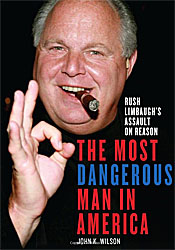
For example, a highly critical book about Rush Limbaugh ("The Most Dangerous Man in America"), by John Wilson) sports a photo of Rush himself on the front cover. And given the scathing nature of how Rush is portrayed in the book as an irresponsible, sexist, racist, ideologue, one would expect that Rush signed no model release or provided consent of any kind to have him or his likeness be associated in any way with this book. Obviously, the text is editorial commentary about the controversial radio host, so no consent is necessary for using the photo on the book itself.

But what about the promotion and advertising for the book? Both of those are "commercial" in nature: profits are made, and the book itself is a product. Again: promotion is "commercial use." Full Stop. So, one would think that Rush would have his lawyers find any legal position possible to stop or slow down the supply chain, from the photographer to the stock agency to the publisher. Yet, there it is in full color, used to both promote and advertise the book.

The reason a release is not required is not because this was the photo used on the book, but because this photo—or most any photo—would not cause a common person to believe that Rush is an advocate or sponsor of the book. (If there were a photo of Rush standing proudly next to a poster sized replica of the book, then such a photo could suggest he advocated the book, although the existence of such a photo would be unlikely.)

So, the fact that a photo is used as part of a promotion is a red herring. Photos may be on web pages, in portfolios, and presented for sale, yet the "advocacy" question is not satisfied simply because photos are displayed. There has to be more context to imply advocacy.

This is true of non-commercial uses as well. Non-profit companies often believe they can use photos of people in their materials because they are implicitly "non-commercial." But again, the determining factor is whether the person could be perceived as an advocate or sponsor of the organization.

Speaking of supply chain, note that the photographer who shot the photo of Rush Limbaugh didn't need a release to take the picture or to sell the image; he didn't need to know what the buyer was going to use it for, assuming he was even aware that someone was buying it. Similarly, a stock photo agency can display the image online, which is how the book publisher (Thomas Dunn Books) found it.

The moral of the story is, take "commercial use" out of your vernacular, and only focus on the "advocacy" question. And while that's the right place to start, such assessments are not always easy; people disagree on specific cases and argue incessantly.

A common example is photographer's own self-promotional pieces. Naturally, most believe that these are "commercial use" of images, but again, that's not the sole trigger. Most images used as part of a piece that promotes someone as a photographer is almost universally interpreted by the public as "examples" of the artists' work, not necessarily as advocates for them. Such an assertion would require text, often in the form of a quote praising the photographer's work. That context would require consent from the person depicted.

As for being in the business of selling photos, photographers are never responsible for having to know the answer the "advocacy question." Someone else is going to publish their pictures, which means that the buyer bears the risk. Photographers or stock agencies can't be responsible for how other people use the images they acquire, especially because one can't make the advocacy assessment until the photo is ultimately put to use, which is long after the financial transaction took place.

Lastly, there are portfolios: Photographers do not need releases for photos for these.

First, a portfolio is rarely considered a "promotional" item, unless it's put together very poorly. Professional portfolios consist of a collection of artistic works that demonstrate the skills and talents of the photographer. For any given image to be interpreted as to suggest the subject were an advocate for the photographer, particular text would have to be used, which is not typical for a good portfolio, which means that permission is not required in order to use photos of people. This includes all forms of publication of the portfolio, whether in physical form, or as a website, or other media.

The one thing to be aware of, however, is that sometimes photographers take pictures of people in special, "closed sessions," where an agreement was made ahead of time—before the photo was taken. If a subject posed for a photographer with the pre-arranged agreement that the photos would not be used in a portfolio or any other manner, than that agreement takes precedent. (Of course, a new agreement, such as a model release, can supersede it.) Such an agreement would have to be established first--it cannot be retroactively enforced.

That said, any good photographer would honor such a request, even if he or she didn't have to.

Labels: , , , , , , , , , , ,

Saturday, August 14, 2010

The Obama Photo Copyright Controversy


I was recently forwarded Peter Friedman's article titled, Fairey˙s Obama Hope poster copied nothing from Garcia˙s photo that could be copyrighted.

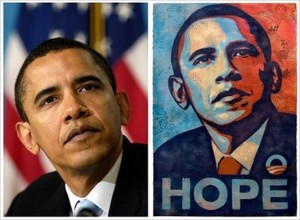
Normally, the arguments in this case are whether Shepard Fairey's artistic rendering of the image is an infringement of a photograph by AP photographer, Manny Garcia. But in this case, Friedman argues that the image doesn't have enough "copyrightable elements" for it matter in the first place. Under copyright law, works are ineligible for copyright protection if they do not contain enough unique qualities that would differentiate them from others. For example, photos of coins are generally not copyrightable unless there are unique angles, uses of light, or other qualities of a "creative" nature. Friedman argues that, while Garcia's photo may contain some elements -- though he also argues they are minimal at best -- Fairey's artistic rendering virtually removes them: that Fairey's image has few, if any, copyrightable elements. His article states, "the poster entirely changes these details by transforming them into a stylized combination of red, white, and blue. Moreover, it is plain the colors of the photograph are in marked contrast to the colors of the poster."

Friedman's logic concludes that if Fairey's photo has no copyrightable elements, then how can such a work infringe on any other work?

While an intriguing question, one that I hadn't heard raised before, the artist in me has a hard time buying into the notion. Fairey's is a very identifiable style, one that Friedman himself applies to his own image, as shown here.

Not only does Fairey's rendering enjoy its own protection under copyright, but the fact that it was derived from Garcia's photo means that Fairey's ability to use the work is limited. No one disputes that. Where the real argument begins is discerning the conditions where Fairey is limited, and where he's not. That is, unless he gains permission from Garcia, Fairey's use of his own rendering is limited to "editorial" uses, such as artistic display, political or social commentary, satire, and so on. On the other hand, "commercial uses" require Garcia's consent, such as when the image to advocate a product or service, or to promote an idea, including political or religious points of view. These are the types of uses that define "commercial use" as described by most state publicity laws. Granted, publicity laws and copyright laws are different, but the definition of terms are consistent.

And herein lies the ultimate question: is the Fairey "Hope" poster a form of protected political speech, or a commercial use? As Friedman points out, political speech is at the heart of the First Amendment, and people's right to express themselves--especially on matters of politics--is always given deference by the courts.

While a true statement, it's not quite that simple. Just because the Fairey image has been used in a political context does not necessarily imply that it's "political speech." And even if it is, the greater question is whether you can appropriate anyone -- or anything -- as a tool in that speech. For example, if the Fairey image were of a recognizable factory worker holding a hammer, and that person was an ardent Republican, we can be very sure that this person would sue Fairey for suggesting that he was an advocate for Obama. And the courts would not even begin to entertain the notion that this use of the image was "protected political speech." The First Amendment has its limitations, and this is such an example.

Although "property" (such as a copyrighted photograph) does not enjoy the same protections as people's rights of publicity, the point of the example was more to illustrate that the use in question is would fail a critical Fair Use test: it's an advocacy piece, and when advocating a political idea, you cannot misappropriate someone's likeness or their property without their consent. The ideas, opinions and expressions have to be yours, and yours alone. You have the right to express an opinion about someone in a political context, but misappropriating their property (or someone else's) for that purpose is not the same thing.

What if Fairey applied his artistic rendering technique to the Pepsi logo and added the phrase, "Obama's Generation." One can imagine that Pepsi would not take so kindly to having their logo misappropriated in such a manner.

Now, if Fairey's work were merely a piece of art hanging in a museum or an art gallery, courts have deemed this as Fair Use, regardless of the price that it may command, or even whether he copied it directly from Garcia's photo. ("Commercial" use is not not measured solely by monetary consideration.) Yes, one can appropriate another work, a person, or a logo without their consent, for purposes of artistic expression.

But which is the Fairey image? Protected art form? Or an advocacy poster? We have competing notions, but which carries more weight? To reconcile this logjam, courts often take into account is the predominant use? Is it used more as an art form? Or as a form of advocacy?

Or is Fairey just out to make a buck?

Labels: , , , , ,

Wednesday, December 16, 2009

Lying about Photo Licensing

What was your annual income from photography last year? What was your average license fee? What kind of terms do you agree to? Do you ever give away work for free, or shoot an event gratis?

If you're like most people, your answers are highly unreliable, and most likely weighted towards the kinds of answers you would like to be true, especially if you believe you can give a "bump" in the right direction for the industry as a whole.

Unreliable answers from survey participants goes with the territory in the data analysis world, but in the photo licensing world, is it enough to distrust the underlying assumptions we have about the photo industry, such as the total market size, or the role of semi-pros and consumers?

The question rises to a new level given a similar awakening within the radio industry, according to this article in the New York Times (Dec 16, 2009). New, provocative and surprising insight about people's actual listening habits, versus what they claimed they were doing, has had dramatic effects on advertising rates, and even the existence of certain kinds of broadcasting.

According to the Times article, what has propelled the industry into a flurry of self-examination was a recent conversion from "measuring ratings through surveys to monitoring listeners electronically using so-called Portable People Meters."

Among the findings, the Classical Music market dropped by 10.7%, Talk Radio by 2.6% (and consists of 80% conservative commentary), and more people listen to "light rock" and "easy listening" than they ever admitted before.

"People tended to look at it almost like an election -- they would vote for the things they liked," said Jaye Albright, an industry consultant with Albright & O'Malley, a radio consultancy.

Classical music, being one of the largest music forms and radio station formats affected by the new data, is probably most closely associated with the photo industry because of the impassioned opinions by its own advocates. According to the Times article, classical music is perceived by its advocates as being an important civilizing force, and an "art form that is extremely related and important to our cultural history," Joseph W. Polisi, president of the Juilliard School, said.

But, as the objective and indifferent truth-telling meters indicates, strong belief in the culture and the importance of the art for does not necessarily translate to people's actual behaviors.

Saying you support a point of view, even though it's not backed up by actions, is one thing. Another is that people actually engage in behaviors they wouldn't admit to.

For example, more people listen to oldies, country and "light rock" than they have admitted in surveys. Especially men. In fact, under the survey format, 34.7% of men volunteered that they listened to soft rock, but when they were using the meters, it turns out that 40.1% did -- a 16% jump. This has a huge impact on the rates advertisers are willing to pay, and what stations are willing to broadcast. And this affects where investment goes, and so on.

Indeed, these discrepancies are consistent with findings within the television industry, when it moved away from volunteers hand-writing their viewing habits to being given electronic monitoring devices. As Arbitron (the ratings company) put it, "people overstate listening to stations they felt reflected better taste."

As an objective photo industry analyst, I immediately see an identical phenomenon in the photo industry. I've long argued that most in the photo sector use unreliable data collection methods, survey models, and sample sizes that have never represented the population at large.

To wit, most pro photographers and trade organizations cite two common sources for their industry data. Cradoc Software, makers of FotoQuote, a software application that helps photographers come up with tools to help price their work based on prior sales figures they collect from the industry. However, their data is collected from pro photographers who volunteer licensing information, which, as we should have learned, is highly unreliable. And it's made worse by the unrepresentative sample size of the population of those who license images.

Other perceived reputable sources include surveys done by trade publications like Photo District News, and those from Jim Pickerell of selling-stock.com. In those cases, data is collected from either traditional stock agencies or self-proclaimed pro photographers (as defined as someone whose income from photography is more than 50% of their total annual income). The fundamental premise here is that they are the prime and statistically viable representatives of the bulk of all licensed images.

This then raises this disturbing question (one that I've been raising for years): what should one make of his analysis if it turns out that agencies only make up 60% of the market? 30%? 15%? Or Less? Would stock agencies start focusing attention on consumers? Would non-photo related media companies start eying photo agencies and social networks as a new, untapped source for potential revenue? Might trade associations and publications shift focus to the consumer market?

Perhaps so, but they can't do it just yet. Knowing that something is wrong with the old data does not draw of map of what the correct data looks like. Real numbers still need to be gathered.

And we're getting closer to that all the time. Using image-recognition technologies from PicScout and Idée, the web can be crawled and images can be examined to determine their source. PicScout has the advantage here in two ways. First, they have already fingerprinted and indexed most images from all the major stock agencies, as well as the larger microstock sites. In one fell swoop, they could examine images used commercial websites and calculate this critical piece of information:

What ratio of licensible images can be attributed to a stock agency?

When I say "licensible images," I'm referring to image uses where there is no legal ambiguity. That is, I'm not talking about social networks, photo-sharing sites, personal web pages or other sites that might host images in a manner that could potentially be permitted under Fair Use.

(For the record, using someone else's photo on a photo-sharing site is not easily defined as "infringement" because it depends on how the image is displayed, or other claims made by the individual that put it there. Many such uses are protected under Fair Use, as they involve critique, demonstration, education, or other kinds of factors that may not constitute infringement. our goal here is to examine only sites where images use are not legally ambiguous.)

This quick snapshot of information might also give us a sense of which agencies are taking which slice of the pie. Are Microstocks really eating the mega agencies' lunches? What about the Creative Commons?

Obviously, this is not going to tell us about license fees, or whether the photos are sourced from pro photographers or consumers, or whether images were stolen or licensed. But, we can get a far more reliable picture of what percentage of commercial images are actually from stock agencies.

While PicScout is currently in the best position to do this analysis, and that the data is useful, there are caveats, as it suffers from two major setbacks: 1) it only examines "commercial" sites, and 2) it does not track real-time use of editorial images sufficiently to have a reliable effect on analysis results. These caveats are important because they cannot be used to draw conclusions about the industry as a whole--only about the use of commercial images buy commercial websites.

And while commercial images and uses are very important, it should be noted that the editorial market is far and away much larger than the commercial market for images, largely because more content is used, sites publish more frequently, and in larger volumes. It is also more common to use images from sources other than major stock agencies, since the abundance of such content is higher, license fees are lower, and liability risk for infringement is negligible. Gathering data about image use for editorial uses requires more frequent crawling, more frequent updates of editorial imagery served by both agencies and photographers and underlying technologies that PicScout does not say they perform.

But again, these caveats don't invalidate findings in the commercial sector. In fact, I think it'd be more like the quiet, soothing alarm one uses to wake up than the blaring buzzer of a dime-store clock. But either way you look at it, the industry does need to wake up, and this data can have the most sweeping effects on the general understanding we have about the photo industry like nothing we've seen before.

If so, what happens next?

In my last blog entry, titled, Weathering Climate Change within the Photo Industry, I posed the question, "How would the industry behave if it turned out that their assumptions about the industry was entirely wrong?"

Since it is fast becoming within our technological grasp to actually uncover this information, I strongly suggest that the pundits within the sector consider that question. Take a long, hard introspective look at such beliefs and consider how strategies would change if it turns out that its core understandings and assumptions are misdirected. It won't be long before even more advanced research methods will uncover even more detailed information, such as actual license fees, the role of search engines in the licensing path, effectiveness of keywords and other metadata, and so on.

This will raise the volume of that alarm clock even more. And there's a reason for such a clock: you don't want to miss the plane.

Labels: , , , , , , , , , , , ,

Saturday, April 12, 2008

When Editorial Uses of Photos Require Model Releases

Recently, I've noticed a big increase of discussions on photo forums involving questions of whether model releases are necessary for certain types of shooting conditions. What struck me is that so many of these questions were about the need for releases for editorial uses, a form that normally doesn't require model releases anyway.

Here are some examples that came up in discussions, all of which share a common theme.

  1. You're a wedding photographer and you're shooting the bride and groom during a ceremony at their home.

  2. You're an equestrian photographer on a "farm call" to photograph a horse at the owner's stable.

  3. You're an art photographer and you're at an artist's studio to shoot a few pictures of his latest sculpture that he will send to his agent, who will then send them to magazines for a press release.

  4. You're a portrait photographer and own a studio at the local mall. A client comes in to have pictures taken of him so he can distribute them to potential modeling agencies.

  5. You're a press photographer, and develop a special relationship with a congressional candidate, who invites you to the family estate to photograph the clan for a memoir they intend to publish about the personal tolls that political life can have on a family.
Though there are contracts associated with each of these assignments, none of them include model releases by the subject for the photographer. Here's the question: can you license any of these photos for EDITORIAL use to a newspaper who is doing a story on the individual who is the subject of any of these given photos?

Most people would say no, and would guess that it's because of the lack of model releases. True, but the more important (and harder) question to ask is: why? After all, as you may know, model releases aren't usually necessary for editorial uses of photos, and you can't get more "editorial" than a newspaper story. So, what makes these cases above so different that model releases would be required for an editorial publication?

Here's where almost everyone will now guess wrong: they'll say that the photography was done on private property (or "of" private property).

That's not it.

What matters are the laws governing "personal privacy," and the fact that the property itself may be private and/or personal is actually not a factor here. Privacy laws protect people's rights in ways that transcend issues of "property" entirely. This may include conditions where 1) people waive their privacy rights even on their own property, and 2) people preserve their privacy rights on public property. So, the first thing you need to do is dispense with the notion that "property" has anything to do with privacy--at least, insofar as the publication of photos in editorial contexts is concerned.

The other thing you need to immediately forget are the high-profile cases concerning "violations of privacy," such as breaking and entering, intruding on personal space, planting hidden cameras in people's homes or in the workplace, or using brute force methods to get pictures. In short, stop thinking about just those cases that involve "aggression." While such aggressive techniques do violate privacy laws, these are obvious. What's more interesting--and which is far more common--is where photographers can violate privacy laws in very passive ways, even including situations where the photographer has written permission from the photo subject to photograph him. The cases listed at the top of this article are perfect examples.

Here's how you need to think about privacy laws from the top down:

Does there exist "a reasonable expectation that one could be photographed by the general public without the person's knowledge"?

What is the relationship between the photographer and the subject?

How much "orchestration" was necessary in order to capture the photo?

Each of these requires discussion, so let's address them individually. After that, I'll tie them all together to present a real-world scenario that everyone can identify with.

The first item is the most important because it lies at that pivotal dividing line between personal rights and that of the First Amendment (which affects freedom of the press). That dividing line means that people are entitled to "privacy" when they're in certain conditions, but they waive their rights in other conditions. The easy cases we all know about are: when you are in public, you can reasonably expect that you could be photographed without your knowledge. When at home, you can expect that your privacy is protected from such photography. Easy enough, but it gets complicated when you introduce other conditions.

For example, each item in the following list is a private property: an amusement park, a bar, a zoo, your swimming club, your golf course, your church. In each of these cases, the general public can come, and they often have cameras with them. Hence, everyone on the premises has waived certain rights of privacy insofar as their photos being taken by others, even though the property is "private." Don't necessarily take this as a universal truth though; there could be specific venues where photography is prohibited, thereby changing one's "expectations" of being photographed. Still, once again, don't take that as a given either. Just because a venue may say there are prohibitions, doesn't necessarily mean the expectation goes away. It's not enough to just see signs that say "no photography," or a warning on the back of a ticket stub that says you can't take pictures. And you certainly never rely on your opinion that people shouldn't be taking pictures. If the rule is not enforced, and you still see people shooting away without intervention, the expectation of being photographed still exists.

True, one could argue this case to a judge, and one may get some leeway because of this, but the judge will weigh other factors as well. He's going to be as objective as possible by looking at the behaviors of others in the environment and assessing what's actually going on. If many people are conspicuously taking pictures, whether they're allowed to or not, this will be considered. On the other hand, if security personnel are stopping people from taking pictures, then it can be argued that the expectation of being photographed is reduced. Between these two extremes lies the reality of the situation.

Consider a celebrity who argues that he only showed up at the event because he was promised that no photos would be taken. If it was clear that the ban wasn't enforced, and there were people taking pictures everywhere, and he had an opportunity to leave before being photographed, he may have a hard time convincing the judge that his privacy was violated by the photographers. Separately, he may have a claim against the venue for failing to enforce the photo ban, but the judge will consider that the conditions at the event were obvious and the celebrity had an opportunity to leave. By staying anyway, he subjected himself to a "reasonable expectation that he would be photographed." If you're one of the lucky photographers that got a photo of him, and that photo ended up in the newspaper, you haven't violated his privacy. That's editorial publication, and the photo doesn't need a release.

So, the fact that you're on private property is inconsequential. Indeed, there are cases where you can be in a public place and still have your privacy rights protected. How? This gets into the second point above: what is the relationship between the photographer and the subject?

To illustrate, consider the scenarios listed at the top of this article. In each case, the people being photographed asked the photographer to do so because they wanted the pictures for themselves. Even if they are for publication in the general press, that part is irrelevant insofar as privacy rights are concerned. It is the direct invitation to the photographer by the subject to shoot a specific thing which implies that the subject has not waived his privacy rights. Thus, the photographer's use of any of those photos requires consent from the subject (in the form of a model release). Yes, including for editorial publication.

Note that this does not affect copyright status--the subject is not suddenly the owner of the photos, nor does the relationship imply a work-for-hire scenario. It's simply a matter of privacy, and the scenario involved means that that no one has waived any rights.

Once again, note that "private property" has nothing to do with anything here. Whether the photo session was on public or private property, the photos taken by the photographer in question are restricted due to the circumstances involved.

Back to the "relationship" factor between the photographer and the subject: The alert reader will note that, if the photo session is on public land, one cannot necessarily assert privacy rights to others. Not every person with a camera is "the photographer" with whom the subject has a relationship. Consider a couple that hires a wedding photographer to shoot their ceremony, and that ceremony happens to be in a public park. Only the hired photographer is bound by the agreement made by the couple, so the photographer has no rights to license those photos. However, because the ceremony is in the public, other people who have cameras, such others at the wedding or uninvited bystanders, can each shoot all they like, and license those photos to others for editorial publication or any other uses that do not require model releases.

The special relationship between the photographer and the person that hired him has been upheld in court cases, especially those involving weddings. Judges' rulings have maintained that people's expectations of the service that the photographer is providing is one in which they can reasonably assume that these photos are for their personal uses.

To illustrate the strength of this relationship's effect on the need for a release, consider the scenarios I described involving an artist and his sculpture, or the owner's horse. Normally, only photos of people require model releases because animals and objects don't have privacy or publicity rights. But, there still may be restrictions on the use of these images because of the privacy laws involved and the "relationship between the owner and the photographer." The fact that the photographer was invited for the purpose of providing a service puts limitations on all the photos taken during the session.

What's further interesting is that the strength of these cases have been decided on the weight of another factor involved, which leads us to the third item on the list: to what degree was a photo "orchestrated."

When it comes to orchestration, the idea is that the more involved the photographer and subject are in coordinating how photos are taken, the more "invasive" the photographer is on the privacy rights of the subject. Remember the first rule, where a subject waives his rights of privacy if he can be photographed without his knowledge? Clearly, if the person is unaware he's being photographed, his actions are of on his own free will, and anyone that witnesses such acts in a public space is entitled to publish photos of them in an editorial context. But, if the subject is directed in a controlled situation, he is no longer acting on his own accord--he's doing what he's told to do--so photos of him may not necessarily be representative of him. Even if he's agreeing to be photographed, he still maintains some rights of privacy.

Now, understand that this is purely academic right now, and real-world situations may present very gray areas. For example, just because you ask someone to pose for a picture doesn't necessarily mean that they are now "being directed." And though you may still be safe if you ask them to wave, or stand next to a building, or even spend considerable time with them in a casual or candid manner, you can see that each of these progressive acts leads you closer to that gray area; the point at which you cross into the "privacy" zone is rarely clear and has to be evaluated on a case-by-case basis.

So now, let's pull together all three of the checklist items, and consider a case that involves them all: you're hired by a restaurant to photograph the dining room with people eating. Here's a complicated situation because we have many people involved, a variety of conditions, and possibly some "direction" by you to the patrons. So, let's piece it all together.

First, unlike the restaurant owner, the diners have no relationship to you at all, so the first question remains the most important: "is there a reasonable expectation that they could be photographed without their knowledge?" As discussed before, one has to do an on-site assessment: Are others taking pictures? Are you conspicuous with your camera? Has the restaurant owner told the clients (verbally or with a sign) that they might be photographed? Even subtle things like whether it's a quiet, intimate, "private" sort of venue, or whether it's a loud arena-type of pizza parlor, can imply a different perception on whether there's a "reasonable expectation of being photographed."

Assuming there is such an expectation, then the clients have waived their privacy rights, and you can license the photos (without releases) to a client who may publish them in an editorial context.

Next is the question of "orchestration." Are you simply photographing the room, or are you having people pose for you? Is it a simple shot, or are you directing a man and a woman (who don't know each other) to clink their glasses together and gaze into the camera? Are you adjusting the smile? Fixing hair? The more you get into these actions, the more likely it is that your orchestration begins to threaten their rights of privacy if these photos were published without a release, even in editorial contexts. You haven't violated anything by taking pictures; it's the publication of them (or the licensing of them to someone else who can publish them) that could be.

Assuming there is no orchestration, and that people were aware that they were being photographed, you can license these photos for editorial purposes to any buyer.

Oh, Wait! Had you forgotten that it was the restaurant owner that hired you? He's the one that wants to use the photos. Is he aware of all these issues? Probably not at all. So, as the hired photographer, you have to be aware of them so you don't get your client into trouble when he publishes the pictures.

You might think that it'd be easier if you just had everyone sign releases. Well, again, in the real-world, that could cause more trouble than it's worth. Diners don't want to be bothered with that as a group, so you would really only want to do that with people with whom you've given direction, or who may appear to be "advocates or sponsors" of the restaurant. Why's that? Because the owner probably wants to use these photos for promotional purposes, and for that, he would need model releases from anyone that could appear to be "advocates or sponsors." Note that model releases are not required from people who are simply part of a scene, even if they are recognizable, and even if the use is commercial (advertising or brochures). What triggers the need for a release in a commercial use is if the people appear to be "advocates or sponsors." So, if one of the pictures you took is of a couple clinking their glasses looking directly into the lens, and the picture is clearly on them, they would have to sign a release for the restaurant to use their photos. On the other hand, a wide-shot photo of the entire room with everyone eating at their tables (not looking at the camera), none of these people would need to sign a release. This applies to both the commercial and editorial uses by either you or the restaurant owner.

Got all that? Well, we're not quite done yet. There's one more important factor in the "relationship" section that hasn't yet been brought up: one in which the photographer asks the subject to participate in a photo shoot, rather than the other way around. In each of the scenarios discussed so far, the subject asked the photographer to be photographed. But, what if you're the one to call the farm and ask owner if you can bring a group of photographers (perhaps students) to do a photo session of the owner and his horses? This is a subtle but important difference that could change the entire landscape of whether releases would be required for editorial uses.

Another way to look at this is to ask, "what is the purpose of those photos?" If the subject hired the photographer, he knows what the photos are for, and his expectations about how they are used have been set. If the pictures were to later show up in the paper, it would be a dramatic difference to his expectations than if you asked the subject to photograph him. Here, his expectations of the photos are simply undefined, and this subtle difference weighs very strongly insofar as determining whether his privacy rights have been violated. For instance, he'd have an easier case to make if he could say to the judge, "I hired the guy to photograph me and my horses so I could have prints--imagine my surprise when they showed up in the paper." This is a stronger case than if he said, "These guys asked if they could take pictures of me, and a few weeks later, there I am in the paper." Here, the difference in the preconceived expectations carries weight as to whether the farmer's personal privacy has been violated.

Again, individual cass can be argued, but I illustrate the difference here because one scenario is a stronger case than the other. And when you factor in other instance-specific details, the pendulum has a tendency to swing in unexpected directions quite easily.

And finally...

You may recall that in the beginning of this article, I said there was a contract between the parties in each assignment. But I didn't say what was in those contracts so we could focus on understanding the concepts involved. Now that that's done, we can go back and revisit the contracts and see if the terms alter anything we've assumed.

First and foremost, if the contract is "work-for-hire", then the photos aren't even yours in the first place. You have to hand them over to whoever hired you, and you're done. You have no rights to or legal access to those photos (unless, of course, the client chooses to let you have them). A work-for-hire contract has to actually use that phrase.

Assuming it is not a work-for-hire contract, the client's own use of the photos are limited to personal use only. I had mentioned in several of the examples that the clients were going to publish the photos in some form. Technically, because you own the copyright to the photos, the client cannot publish them at all without permission from you. Assuming that it was the client's intention to publish them, we can assume that the contract specifically stipulated the right to use the pictures for the stated uses. However, just because the client can use the pictures in the manner stated, it does not affect your use of the photos insofar as the model release requirements are concerned. That is, if you performed a portrait session with a client who had you sign a contract saying that he's going to provide these photos to a stock agency who will license them, he has the right to provide them to the agency because it was written into the contract. You don't, unless you have a model release from him. Otherwise, you've violated his privacy rights because he came to you to get his pictures taken.

And that brings us to the last point: while it's important to understand all these issues raised here, the best business decision you can make whenever any signed contracts are involved, is to include language that outlines the terms of a model release. That would make the entire discussion moot. And provided that the release language is broad, you could even license all the pictures discussed here for commercial uses. The one exception would be the restaurant scenario because other people (other than the owner) may be involved. The owner can't sign on behalf of clients, so those people would have to be dealt with individually.

Labels: , , , , , , , , , ,

Sunday, February 24, 2008

Non-commercial uses of images: do non-profits need model releases?

In the spirit of my recent accouncement of my latest book on model releases, I thought it apropos to post a blog entry I have had in the queue for a while: whether non-profit organizations are immune from the need for model releases for whatever they publish: promotions, newsletters, fund-raisers, etc. At the heart of this question is what is meant by "commercial vs. non-commercial use."

It started when I read a blog entry from a site that caters to non-profits. It had this text:

"...if you are publishing a photo for information or educational purposes, not commercial purposes like product advertising, you can typically print it without a model release. The majority of non-profit publications fall into this category."


The premise here is erroneous: that non-profits fall into the category of "non-commercial users." This is not the case, and this misunderstanding lies in what is meant by "commercial use." Most people associate this expression with advertising and promotion of for-profit products and services. Yet, those are not the only uses covered by the law surrounding privacy and publicity laws. And it's those laws that stipulate whether consent is required from a person to publish a photo of them. (A model release is what grants that consent.)

These laws are not based on "commerce" as people traditionally think of it, but around how people are represented, regardless of the kind of business the publisher (user of the photo) happens to be. Whether a person's likeness is being used to advance a cause, an agenda, or any number of things, these are really the core of the intent of the law.

Federal statutes exist that protect people's rights of publicity, and about half the states in the US have additional statutes that go beyond those basic principles. A good example of this is found in the California Code 3344, which can be viewed here.

You'll note that there is no text in any of this language that talks about whether money is made, or the status of the publisher of the image, such as whether it is a for-profit or non-profit. This is not what is meant by "commercial"... Instead, it really refers to "in the course of business," and to differentiate the use from news reporting and other uses protected by the First Amendment.

For purposes of model releases, it's the use of the image that matters, and non-profits are businesses, like any other: they have staff, letterhead, advertising and marketing budgets. This is all part of "normal course of business," otherwise known as "commerce." Accordingly, when they publish photos of people, there may be a need for model releases that applies no differently than for for-profit companies.

Further supporting the notion that the law is not intended to exempt non-profits is the fact that the statute does not define what "services" are. A non-profit that delivers food to the homeless is providing a service, as is a non-profit that advocates humane treatment of animals, or that provides assistance to war veterans, or religious groups that teach reading, or HIV/AIDS groups that provide support services, or gay and lesbian organizations, and so on. If the assumption made by the quote on the non-profit blog mentioned above were true, it would be that these organizations would be exempt from requiring a release from using a photo of someone because they are non-profits. As you can imagine, any one of these organizations may or may not be supported by everyone in the country, so could it really be that they could use photos of anyone they wanted for any reason, without their consent? That's an easy "no." Imagine how upset you would be if a non-profit that advocated a cause you don't support were to use a photo of you in an ad.

This is what federal and state statutes are there for: to prevent this sort of unfettered use of people's likenesses. Nowhere does any statute state whether "money" as anything to do with any of these transactions or companies.

But, don't let this reality jolt make you think that all non-profits have to get releases for all photos they use. And since non-profits are treated identically to for-profits, it may even be more surprising to learn that for-profit companies don't necessarily need releases for all the photos they use in ads either. And this potential lack of a need for a release lies in an infrequently-read subsection (e) of the same California Code 3344, which reads:

The use of a (...) photograph, or likeness in a commercial medium shall not constitute a use for which consent is required (...) solely because the material containing such use is commercially sponsored or contains paid advertising. Rather it shall be a question of fact whether or not the photograph or likeness was so directly connected with the commercial sponsorship (...) as to constitute a use for which consent is required (...)


In other words, the person has to look like they are somehow advocates or sponsors of the underlying product or service. In the simplest case, just because a website, magazine, newspaper, or newsletter may have ads in it does not suddenly trigger the need for a release from the people who may happen to be in photos on the same page. Just having a photo of someone is not the test -- it's whether there is an implied association (or affiliation) between the person/people in the photo and the "user" (publisher) of the photo, or the advertiser. (Hint: you see ads on the same page as articles in newspapers. That's no different than ads on a web page that happens to have editorial content and photos of people. Readers know the difference between an ad and an article, at least in most mainstream publications.)

Obviously, this is highly subjective, as well as highly-dependent on the given photo and the given use. All of this is entirely (and somewhat arbitrarily) up to the whims and opinions of judges. Not that there's anything wrong with that. But, it's this lack of specificity that allows people's assumptions to lead them astray.

In effect, this new understanding of subsection (e) introduces a brand new view that you probably didn't expect: just because someone is recognizable in a photo and that photo is used in an ad, it does not necessarily trigger the need for a release. Subsection (e) states that the person in the photo must appear to be "directly connected with the sponsorship." If you were to have a close-up photo of a person looking directly into the camera with text over his face saying, "I have AIDS," the implied between the person in the photo and the organization is pretty strong. However, a photo of a local band that happened to be playing at an outdoor event that happened to benefit the non-profit could show up in a newsletter to members with a far less likely need for a release. Is there an implied association? Perhaps, but it's far more benign and less likely to be objectionable to the band members (or they wouldn't have played the gig in the first place).

Between those two endpoints is an infinitely large number of possibilities for how someone might look as to determine whether they are "directly connected" to the published use of the photo, and whether that person would be likely to object.

And it's that analysis that leads us to real-world events and how they often don't reflect academic discussion, or even the laws themselves. This is why most non-profits don't think or care about having releases: most of the time, nothing happens and no one cares. But it's still important to mention, because the law is the law, after all.

In conclusion, despite the fact that this was about non-profits, it turns out that they aren't different than any other organization. What this topic is really about is what is meant by "commercial use." It's not what people think -- that money is made or has changed hands because someone's likeness was used. Privacy and publicity laws are written to address people's rights as to how they are represented, and whom they can be implicitly associated with, regardless of whether money plays a role. If a company violates those rights by publishing an unreleased photo that can imply an association, _then_ it becomes all about money. Theirs.

Labels: , , , , ,